


Peeling skin on a brand-new baby can catch you off guard, especially on those tiny hands and feet. In almost every case, it is simply your baby's skin adjusting to life outside the womb.
Is newborn skin peeling normal? Yes, for the vast majority of babies it is. Once you understand why it happens, spotting the difference between everyday peeling and something that needs a doctor's eye becomes a lot less stressful. If you are also stocking up on essentials for those early weeks, our Alppi Wispy Cloud Diapers are built with sensitive newborn skin in mind.
- Newborn skin peeling is normal for most babies and usually starts within the first few days.
- It happens because the protective vernix coating wears off and the outer skin layer sheds.
- Peeling typically lasts 1 to 3 weeks and shows up most on the hands, feet, and ankles.
- Gentle bathing, light moisturizing, and soft cleanup after diaper changes support healthy skin.
- Redness, swelling, cracks, or a baby who seems uncomfortable are signs to call the pediatrician.
Is Newborn Skin Peeling Normal in the First Weeks?

Yes, newborn skin peeling is normal, and it is one of the most common things new parents notice in the first week or two. Your baby's skin goes through fast changes right after birth as it adjusts to the outside world, and in most cases the peeling is completely harmless.
Most pediatricians consider this a routine part of early skin development, and it tends to be more noticeable in full-term or overdue babies whose skin has had more time to mature in the womb.
What Causes Newborn Skin Peeling
Before birth, your baby's skin is surrounded by amniotic fluid and coated in vernix, a waxy protective layer. Once vernix wears off, usually within the first day or two, the outer layer of skin begins to shed as new skin forms underneath. Moving from a moist environment to dry air speeds this process along.
How Long Does Newborn Skin Peeling Last
Peeling often starts within the first few days after birth and tends to clear up within 1 to 3 weeks. Some mild dryness can linger a little longer, and by the end of the first month most babies' skin looks noticeably smoother.
Which Areas Peel the Most
Hands, feet, ankles, and wrists tend to peel more than the rest of the body because the skin there is thinner and moves the most. This kind of peeling usually looks like light flaking or thin, sheet-like layers coming away, without any redness underneath.
Normal Newborn Skin Peeling vs. When It Is Not
Knowing what typical peeling looks like makes it much easier to spot the rare cases that need a closer look.
| Normal Peeling | Not Normal Peeling |
|---|---|
| Light flaking or thin sheets of skin | Red, inflamed, or swollen skin |
| Baby shows no signs of discomfort | Baby seems fussy or in pain |
| Healthy-looking skin underneath | Cracks, bleeding, or oozing |
| Improves steadily over 1 to 3 weeks | Gets worse or spreads quickly |
If you notice anything in the right-hand column, it is worth checking with your pediatrician. Conditions like eczema or rarer skin disorders can sometimes look similar and need a proper evaluation.
How to Care for Peeling Newborn Skin at Home

Caring for peeling skin does not call for a complicated routine. Keeping things simple is usually the most effective approach.
Bathing Do's and Don'ts
- Bathe your newborn 2 to 3 times a week, using lukewarm water.
- Keep baths short, around 5 to 10 minutes, and pat skin dry instead of rubbing.
- Skip strong soaps or scented products, and choose mild, soap-free cleansers.
Should You Moisturize Peeling Skin
Moisturizing helps in some cases, but it is not always necessary. If your baby's skin looks especially dry, a fragrance-free baby lotion applied once or twice a day can help. Test any new product on a small patch first, and skip thick or greasy creams unless your pediatrician recommends them. Many newborns settle into smoother skin on their own, even without lotion.
Gentle Cleanup During Diaper Changes
Peeling skin can feel extra sensitive during diaper changes, so a soft, dry wipe with minimal ingredients helps avoid added irritation. Dry wipes also let you control exactly how much moisture touches your baby's skin instead of relying on pre-wetted formulas.
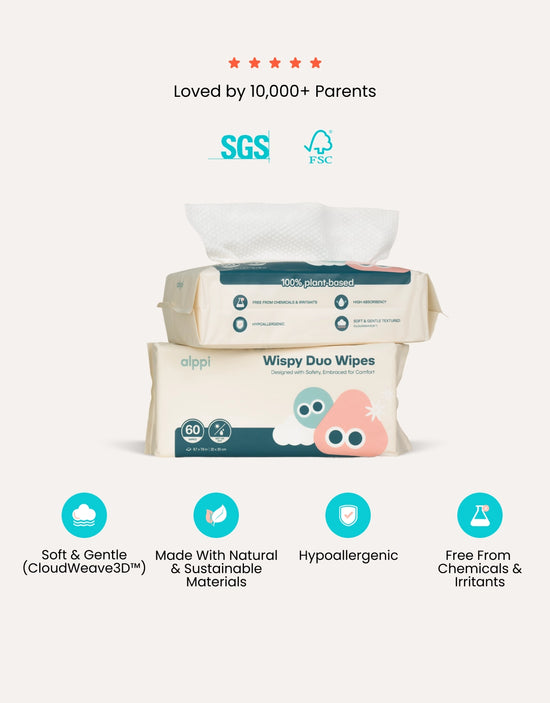
Wispy Duo Wipes (Dry)
Use wet or dry. Hypoallergenic, alcohol-free, and dermatologist-tested, gentle enough for delicate newborn skin.

Wispy Cloud Diaper Weekly Bag
A lighter weekly supply, ideal for trying a breathable, hypoallergenic diaper before committing to a bigger order.

Wispy Cloud Diaper Monthly Box
A full month of cloud-soft, breathable diapers, delivered to your door for daily comfort while skin settles in.
Choosing Diapers for Sensitive, Peeling Newborn Skin
What touches your baby's skin all day matters just as much as bath time. A well-fitted, breathable diaper reduces friction against skin that is already adjusting and shedding.
Why Diaper Fit Matters for Skin Comfort
A diaper that is too snug can rub against peeling patches, while one that is too loose lets moisture sit against the skin longer. If you are unsure which size fits your baby's current weight, our sizing guide breaks it down by pounds so you can size up or down with confidence.
Fabrics and Materials to Avoid
Look for diapers and clothing free from fragrances, dyes, and harsh chemicals, since these can aggravate skin that is still forming its outer barrier. Breathable, chlorine-free materials help air circulate and reduce the chance of irritation on top of normal peeling.
Rash-Free Options for Extra-Sensitive Skin
If peeling comes with any tenderness or your baby simply has extra-sensitive skin, a diaper built specifically for that can make daily changes more comfortable.

Alppi Rash-Free Diapers
Designed specifically for delicate, easily irritated skin, with a breathable, hypoallergenic core in every size.

Alppi Newborn Special
A newborn-sized diaper bundle with an umbilical cutout and soft hook tabs, great for the first weeks or as a gift.
When Newborn Skin Peeling Needs a Pediatrician's Attention

It is always better to check in if something feels off. Trust your instincts and watch for these signs alongside the peeling.
- Your baby seems uncomfortable, fussy, or in visible pain.
- The skin has yellow crusting, discharge, or an unusual odor.
- A fever or unusual behavior shows up alongside the peeling.
- The peeling spreads quickly or seems to be getting worse rather than better.
Quick Reminder
Newborn skin peeling on its own, without redness or discomfort, is rarely a reason to worry. It is the combination of peeling plus one of the signs above that's worth a call to your pediatrician.
Why Parents Trust Alppi Baby for Newborn Skin Care
Every Alppi Baby product is built around one idea: comfort that feels like a cloud, with peace of mind for the parent changing a diaper at 2 a.m. Diapers and wipes are hypoallergenic, dermatologist-tested, and free from fragrances, dyes, and harsh chemicals that can aggravate sensitive, peeling skin.
You can see the full testing standards on our Safety and Certifications page, or read what other parents of newborns are saying on our Reviews page.
Stock Up on Gentle Newborn Skin Care Essentials
Soft wipes, breathable diapers, and sensitive-skin options, everything you need to support your baby's skin through those first delicate weeks.
Explore Alppi Baby


