


The best wooden learning toys for toddlers do one thing a flashing plastic toy can't: they make the child do the thinking.
A wooden stacker waits quietly to be figured out. A toy with lights and sounds does the imagining for your toddler.
That single difference, child-led versus toy-led, is why wooden toys keep earning shelf space year after year, and it lines up with what child development research tends to show.
The wooden toys that get played with daily are rarely the fanciest. They're the open-ended ones that grow with the child.
- Wooden learning toys for toddlers are open-ended, which supports problem-solving, focus, and language in ways many battery-powered toys don't.
- Stacking, sorting, and fitting wooden pieces strengthens fine motor skills and hand-eye coordination.
- Wood tends to be more durable and less likely to splinter into small parts than many plastic toys.
- Wooden blocks suit roughly 12 months and up, with the same set growing in complexity for years.
- Clean wooden toys with a damp cloth and mild soap. Skip soaking or the dishwasher, then let them air-dry fully.
What Are Wooden Learning Toys for Toddlers?

Wooden learning toys are play-based toys made from natural wood, built to grow specific skills through hands-on, open-ended play.
Think blocks, stackers, shape sorters, bead mazes, and multi-activity boards. The defining feature is that they are open-ended.
The child invents the rules and the challenge, rather than following a toy's pre-set script.
- Wooden blocks, the original open-ended toy, support stacking, balance, and early spatial reasoning.
- Stacking and nesting toys refine grasp and sequencing as a toddler figures out what fits where.
- Shape sorters and bead mazes build shape recognition, fine motor control, and problem-solving.
Wooden Toy Categories by Skill
Here is a simple way to think about a wooden toy shelf, organized by what a toddler tends to be working on at each stage.
| Toy Type | Typical Age | What It Builds |
|---|---|---|
| Wooden blocks | 12 months and up | Stacking, balance, and later counting and spatial reasoning |
| Stacking and nesting toys | 12 to 24 months | Grasp, sequencing, and cause and effect |
| Shape sorters | 18 months and up | Shape recognition and problem-solving |
| Bead mazes and gear toys | 18 months and up | Fine motor control through tracing and spinning |
| Multi-activity boards | 10 months to 4 years | Several skills at once, in one growing toy |
Quick tip
A toy with more than one "right" way to play tends to hold a toddler's interest longer than a single-function toy. When comparing two options, the more open-ended one is usually the better long-term pick.
Why Wooden Toys Matter for Learning
Open-ended play tends to support richer thinking. Because wooden toys let a child invent their own rules and stories, they build problem-solving, creativity, and early language as a toddler narrates what they are doing.
Toys that do more of the entertaining for the child can leave less room for that active engagement.
Wood also brings something plastic often doesn't: natural weight, texture, and a bit of temperature variation.
When a toddler stacks blocks or fits puzzle pieces, they are using the small muscles in their hands and fingers, the same ones that later support writing, drawing, and self-feeding.
Simpler, quieter toys tend to create fewer distractions too, which can support the kind of focused, repeated play that builds real concentration over time.
Two Wooden Learning Toys That Grow With Your Toddler
A common frustration parents mention is a toddler losing interest in a new toy after a couple of minutes. Simple, open-ended wooden toys tend to hold up better over time because they keep offering new challenges as a child develops.
Here are two Alppi pieces built around that idea.

A solid wooden bus built around eight ways to play, including a xylophone, spinning gears, an animal shape sorter, and a bead maze. No batteries, so the toddler drives the play.
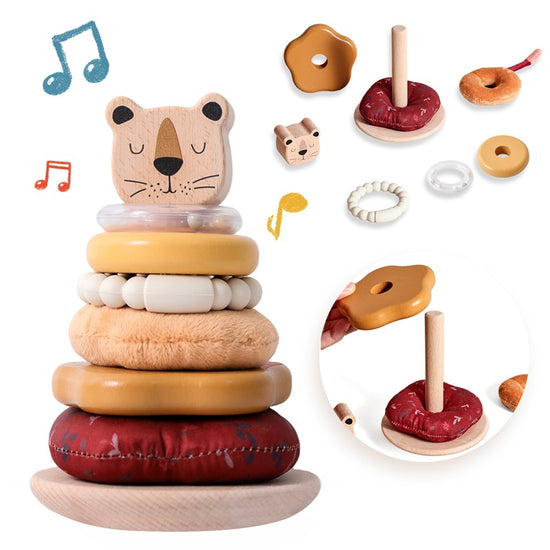
Eight distinct layers across wood, silicone, and fabric, plus a weighted base and a wobble-but-never-fall wooden lion on top that teaches cause and effect.
Between the two, the Lion Stacking Tower tends to meet younger toddlers at the grasping-and-stacking stage, while the Activity Bus carries them through toward age four.
As with any toy, keep an eye on play and check pieces for wear now and then.
Common Mistake and Misconceptions About The Wooden Learning Toys
- "More features means more learning." Often the opposite is true. A toy your child keeps coming back to tends to beat one that does the playing for them.
- "Wooden toys are too simple to be educational." A set of wooden blocks alone can support stacking, balance, counting, and language as a child narrates what they build.
- "All wooden toys are automatically safe." Look for water-based non-toxic paint, smooth sanded edges, and pieces too large to swallow. A clear age label still matters.
- "Soaking or dishwashing is the best way to clean them." This can actually damage wood over time. A damp cloth works better.
A Simple Way to Choose and Use Wooden Toys
Here is a simple process that covers choosing a toy, setting it up, and keeping it clean.
Match it to the stage
Stackers and nesting toys work well for the youngest toddlers, while shape sorters and multi-activity boards suit growing dexterity.
Choose open-ended over single-function
A toy with more than one way to play tends to last longer developmentally than one built for a single task.
Check the safety basics
Water-based paint, smooth edges, no small parts, and a clear age label on the packaging.
Set up a low, accessible shelf
One item per spot, at your child's eye level, with a little space around each so they can choose and focus.
Demonstrate once, then step back
Show the toy's purpose slowly and calmly, then let your toddler explore and problem-solve on their own.
Wipe, don't soak, to clean
A cloth dampened with warm water and a little mild soap works well. Skip the dishwasher, since water can warp and crack wood.
Air-dry fully and inspect often
Let toys dry completely in a well-ventilated spot, and set aside any piece with rough spots, cracks, or chipped paint.
Cleaning Wooden Toys: What Helps and What Doesn't

Wood is porous, so it needs different care than plastic. Here is a quick reference for keeping wooden toys in good shape.
| Do | Skip |
|---|---|
| Wipe with a damp cloth and mild soap | Soaking the toy in water |
| Use a diluted vinegar solution to sanitize | Running wooden toys through the dishwasher |
| Air-dry fully in a well-ventilated spot | Storing toys while still damp |
| Check regularly for cracks or chipped paint | Ignoring rough spots or splinters |
Build a calm, screen-free play shelf that lasts
The Animal Activity Bus and the Lion Stacking Tower are two non-toxic wooden learning toys designed to grow with your child, alongside the rest of Alppi's baby essentials.
Shop wooden learning toysKeep Reading
Frequently Asked Questions
What are the benefits of wooden toys for toddlers?
Do wooden toys help with fine motor skills?
Are wooden toys better than plastic toys?
What age are wooden blocks good for?
How do you clean and care for wooden toddler toys?
Final Thoughts
The best wooden learning toys for toddlers are open-ended, made with safety basics in mind, and built to grow with your child.
Start with a couple of well-chosen pieces, set them on a low shelf, demonstrate slowly, and let your toddler do the work.
Clean them gently, rotate often, and watch the focus and coordination build on their own.
Related Collections to Explore:


