


Understanding the real difference between training pants vs diapers helps you choose the right product for each stage, and use both confidently at the same time when that is what works best.
Potty training brings up a lot of questions, and one of the biggest is training pants vs diapers. You want your child to feel comfortable, confident, and supported through every stage, while also dealing with fewer leaks and less stress.
Let's break it all down in a clear, parent-friendly way so you can decide what works best for your family right now.
- Diapers are made for maximum absorbency and full-time protection from birth through potty training.
- Training pants are designed specifically to support potty training and encourage toddler independence.
- Most children begin the switch between 18 months and 3 years, depending entirely on readiness signs.
- Many parents use training pants during the day and diapers overnight throughout the transition period.
- Soft, breathable options and gentle wipes make both stages more comfortable for toddlers with sensitive skin.
What Are Diapers and How Do They Work?
Diapers are absorbent underwear made to keep babies and toddlers dry by locking in urine and stool throughout the day and night. They are designed for full-time use, including naps, overnight sleep, and long stretches between changes. Most diapers have adjustable side tabs that make changes easy while your baby lies down. Their higher absorbency makes them ideal for younger children and heavy wetters at any age.
- High absorbency for day and night - designed to hold a full bladder release without leaking through to clothing or bedding.
- Adjustable side tabs - provide a secure and customisable fit across a range of body shapes and sizes.
- Strong leak protection - especially important overnight when changes are infrequent and urine volume is higher.
- Soft, breathable materials - reduce irritation during extended wear and support skin health through every stage.
Alppi Baby Diapers Built for Every Stage
Whether your toddler is still in full-time diapers or using them only overnight during potty training, Alppi Wispy Cloud Diapers are hypoallergenic, dermatologist-tested, and cloud-soft against sensitive toddler skin.

Wispy Cloud Diaper Monthly Box
Cloud-soft, leak-free, and breathable. The best value option for families at any stage of the diaper-to-training-pants journey.

Wispy Cloud Diaper Weekly Bag
A flexible weekly supply that is easy to scale down as overnight diaper needs decrease and training pants take over daytime use.
What Are Training Pants and How Are They Different?

Training pants are designed to help toddlers transition from diapers to underwear. They look and feel much more like regular underwear but still offer some absorbency to catch small accidents during the learning phase. Unlike diapers, training pants have a stretchy waistband that allows toddlers to pull them up and down on their own, which is one of the most important parts of building potty confidence and genuine independence.
- Pull-on and pull-off design - toddlers can manage them independently, which builds confidence with every successful trip.
- Thinner padding than diapers - intentionally less absorbent so children feel wetness and develop body awareness.
- Made for small daytime accidents - not designed for overnight protection or full bladder releases.
- Feels like real underwear - the psychological shift from baby diaper to big-kid pants is genuinely motivating for many toddlers.
Key Distinction
Training pants are a learning tool, not a full replacement for diapers. Most families run both in parallel throughout the transition, using training pants during the day and diapers overnight until nighttime dryness is consistent.
Training Pants vs Diapers: Side-by-Side Overview
Before looking at the detailed table, here is a quick visual summary of what each product is primarily designed to do.
Diapers Are Best For
- Newborns and infants not yet training
- Heavy nighttime wetting at any age
- Long car journeys or travel days
- Backup overnight protection during training
- Days when your toddler is unwell or overtired
Training Pants Are Best For
- Active daytime potty practice
- Building pull-up and pull-down independence
- Teaching body awareness through wet sensation
- Outings when full accidents are now rare
- Emotionally motivating toddlers who want to feel grown up
| Feature | Diapers | Training Pants |
|---|---|---|
| Absorbency | Very high, holds full bladder release | Moderate, designed for small daytime accidents |
| Best for | Babies, heavy wetters, and overnight use | Toddlers actively learning to use the potty |
| Design | Adjustable side tabs for adult-managed changes | Pull-on style for toddler independence |
| Encourages independence | No, adult-managed throughout | Yes, child manages pull-up and pull-down alone |
| Overnight use | Yes, ideal for overnight protection | Not recommended, may leak during sleep |
| Wet sensation | Mostly hidden, baby stays dry | Slight wetness felt, builds body awareness |
| Feels like underwear | No | Yes, psychologically motivating for toddlers |
Absorbency and Leak Protection: Which Holds More?
Absorbency is one of the most practical concerns when comparing training pants vs diapers. Diapers are built to handle full bladder releases, including the large volumes produced overnight. Most training pants are significantly less absorbent by design, though some brands offer stronger overnight-style training options.
Will Training Pants Hold Pee?
Yes, training pants will hold pee, particularly small amounts from partial accidents during the day. However, if your toddler fully empties their bladder in one go, leaks are likely. That is not a design flaw. It is intentional because the slight wet sensation is what teaches toddlers to connect the urge with the action of using the potty.
That is why many families use training pants during the day and switch back to reliable overnight diapers at night. This balance supports learning during waking hours while protecting sleep quality for everyone in the household.
When to Switch From Diapers to Training Pants

There is no fixed age for making the switch, and rushing before your child is ready usually extends the overall training timeline rather than shortening it. The most reliable signal is your child's own behaviour, not the calendar.
Staying dry for at least two hours
Longer dry periods show that bladder muscles are maturing and developing the capacity to hold urine intentionally. This physical readiness is the foundation everything else builds on.
Waking from naps with a dry diaper
Consistent dry nap diapers show growing overnight bladder control, which often appears shortly before full daytime training readiness arrives.
Showing interest in the toilet and in underwear
Curiosity about the toilet, following parents to the bathroom, and asking to wear big-kid underwear are behavioral and emotional readiness signals that make training pants far more effective as a tool.
Communicating before or after going
Telling you before they need to go, even just occasionally, shows the brain-bladder connection is forming. This communication skill is what makes training pants work rather than simply serving as a thinner diaper.
Pulling pants up and down independently
If your toddler cannot manage their own clothing yet, training pants cannot do their job. Practice the pull-up and pull-down motion during play before starting training to build the physical skill in a low-pressure setting.
Alppi Training Pants: The Pull-Up That Feels Like Underwear
Once readiness signs are consistent, Alppi Training Pants give toddlers the independence of big-kid clothing with a soft protective layer that supports the learning process through every accident and every success.
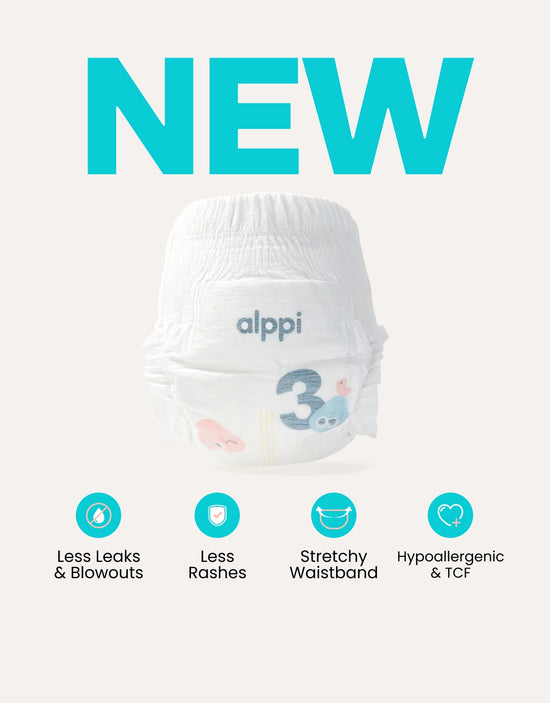
Training Pants Monthly Box
Best value for the full active training period. Cloud-soft pull-ups designed to feel like real underwear and support independence every day.

Training Pants Weekly Bag
Flexible weekly supply. A practical way to test training pants before committing to a larger order during the early transition weeks.

Training Pants Bundles
Stock up and save through the whole training window. Always have a fresh pair ready because accidents happen on their own schedule.
Which Is Better for Each Situation?
Training pants vs diapers is not a question with one universal answer. The right choice depends on what your toddler is doing, what time of day it is, and where you are in the training journey.
| Situation | Better Choice | Why |
|---|---|---|
| Newborn or infant | Diapers | Maximum absorbency needed, no potty training readiness yet |
| Daytime potty training | Training pants | Builds independence and body awareness during active learning hours |
| Heavy nighttime wetting | Diapers | Training pants cannot reliably hold overnight urine volume |
| Long car rides or travel | Diapers | Reduces stress when bathroom access is limited or unpredictable |
| Toddler unwell or overtired | Diapers | Illness and exhaustion temporarily reduce bladder control and awareness |
| Outings with rare accidents | Training pants | Maintains training momentum without major disruption if a minor accident occurs |
Daytime vs. Nighttime: What Should You Use?
Daytime dryness and nighttime dryness are genuinely separate developmental milestones that often come months or even years apart. Many children master daytime potty use long before they develop the physical ability to stay dry through the night, which depends on hormonal changes and sleep cycle patterns that cannot be trained the same way daytime habits can.
For daytime, training pants support independence and body awareness. For nighttime, diapers provide the leak protection that keeps bedding dry and sleep uninterrupted. Using diapers at night while your child wears training pants during the day is not a step backwards. It is exactly what most families do and what works well throughout the transition period.
Nighttime Tip
Watch for consistently dry morning diapers over at least two weeks before removing overnight diaper protection. That pattern, rather than daytime training success alone, is the reliable signal that nighttime bladder control is genuinely developing.
Comfort and Skin Care During Diapering and Training
Comfort matters at every stage. Whether you are using diapers or training pants, soft breathable materials and proper skin care prevent irritation and keep your toddler happy through multiple daily changes. Keeping skin clean during every change is just as important as what you put on your child's body.
Choosing Wipes That Work for Both Stages
Gentle dry wipes are useful for both diaper changes and potty training accident cleanups. The key is finding wipes that are soft enough for sensitive skin, durable enough not to tear during use, and free from fragrances, alcohol, and harsh additives that can cause irritation during a period of frequent contact.
Gentle Wipes and Rash-Free Protection for Every Change
Soft wipes and skin-safe diapers make a real difference for toddlers who experience frequent changes during the transition period.
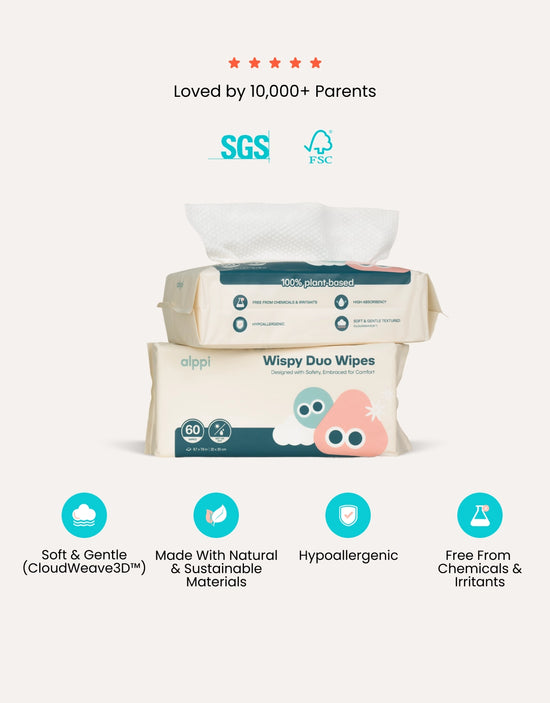
Wispy Duo Wipes (Dry)
Use wet or dry. Hypoallergenic, alcohol-free, and dermatologist-tested. Gentle for the frequent cleanups that come with both diaper changes and potty training accidents.

Alppi Rash-Free Diapers
Designed specifically for delicate skin that experiences extended diaper contact overnight, reducing rash risk throughout the training period.
Cost Comparison: Training Pants vs Diapers
Cost is a real consideration during potty training, especially since both products may be running simultaneously for weeks or months. Understanding how cost plays out over time helps you plan and stock up smartly.
| Cost Factor | Diapers | Training Pants |
|---|---|---|
| Price per piece | Generally lower per unit, especially in bundles | Sometimes higher per unit but usage decreases as training progresses |
| Daily usage volume | Higher for younger babies, lower during training | Moderate during active training, decreasing steadily as skills improve |
| Overnight protection | Reliable, one per night during training | May require a backup diaper, adding cost for nighttime failures |
| Subscription savings | Subscription delivery reduces cost and removes reordering effort | Bundle options available, easy to scale down as training progresses |
Stocking up on bundles before starting potty training is one of the most practical ways to reduce per-unit cost. Having both products reliably on hand also removes stress during the active training period when running out at the wrong moment is genuinely disruptive.
Training Pants, Pull-Ups, and Underwear: What Is the Difference?
The terms pull-ups and training pants are often used interchangeably, though pull-ups technically refers to disposable training pants specifically. Reusable cloth training pants feel even more like real underwear and are washable, but generally hold less liquid per use. Regular underwear offers no absorbency at all and is typically introduced once a child is fully and reliably potty-trained during the day with accidents genuinely rare.
Most families move through the sequence of diapers, training pants or pull-ups, and then underwear over a period of weeks to months, adjusting the pace entirely based on how their individual child is progressing.
Stock Up for the Full Transition Period
Diapers for overnight, training pants for daytime practice, and gentle wipes for every change in between. Everything your toddler needs through every stage, delivered on your schedule.
Manage Your SubscriptionWhy Parents Choose Alppi Baby for Potty Training
At Alppi Baby, every product is designed to give your child comfort that feels like a cloud and give you peace of mind through every stage of early childhood. Diapers, training pants, and wipes are all hypoallergenic, dermatologist-tested, and made with eco-conscious materials so you feel good about what touches your toddler's skin every day.
Read what real families say on the Reviews page, or learn what goes into every product on the Safety and Certifications page.
A Flexible Starting Option

Wispy Cloud Diaper Bundles
Stock up on overnight diapers at a saving. A smart way to stay fully prepared through the entire training transition without constant reordering.

Alppi Newborn Special
A thoughtfully curated starter set and a practical way to begin your Alppi Baby journey with diapers and wipes at a great price.


