


Watching your baby pick up a tiny piece of food with their thumb and finger can feel like a big milestone, because it is one.
That careful little pinch is called the pincer grasp, and babies build it through everyday play, reading, and mealtimes. A few simple, supervised pincer grasp activities for babies give your little one plenty of chances to practice at their own pace. It's one of many skills you'll see unfold as you follow your baby's milestones month by month. Below are six easy ideas, age guidance, and the safety tips that matter most.
- The CDC lists raking food with the fingers as a 9-month milestone and picking up small items between thumb and pointer finger as a 1-year milestone.
- Every baby develops hand skills at their own pace. Ages are guides, not deadlines.
- Large blocks, board books, safe sensory toys, and suitable finger foods give natural practice.
- Choose toys made for your baby's age with no small or detachable parts.
- Stay within arm's reach during every play session and meal.
What Is the Pincer Grasp?
The pincer grasp is the movement babies use to pick up an object between their thumb and index finger. It helps them handle toys and, when ready, pick up food during meals.
Babies usually start by grabbing things with their whole hand, sometimes called a palmar grasp. As finger control grows, they begin raking objects toward themselves, then gradually use their fingertips to pick up smaller items.
How Grasping Typically Develops
| Stage | What You Might See | Easy Play Idea |
|---|---|---|
| Whole-hand grab | Grabs toys with the full palm and fingers | Offer a soft ball or easy-to-hold toy |
| Raking | Sweeps food or toys closer with the fingers | Place a large toy on a flat tray |
| Pincer grasp | Picks up small items between thumb and pointer finger | Offer safe, soft finger foods at meals |
Pincer Grasp Age and Signs of Readiness

Babies develop hand skills at different rates. The Centers for Disease Control and Prevention (CDC) lists raking food toward oneself with the fingers as a 9-month milestone, and picking up small items between the thumb and pointer finger as a 1-year milestone. Our guide to 9 month baby milestones covers what else is happening around that age.
| Sign of Readiness | What You Might Notice |
|---|---|
| Reaching with more control | Your baby aims for a toy or food instead of swiping at it |
| Using fingertips | Your baby tries to pick up objects with their fingers |
| Practicing at meals | Your baby attempts to pick up suitable finger foods |
Offer opportunities to practice, but let your baby set the pace. If you have concerns about your baby's hand use or development, talk with your pediatrician.
6 Easy Pincer Grasp Activities for Babies
Simple, supervised play gives babies chances to practice picking up and releasing objects. These are optional play ideas, not treatments or a guarantee of progress. Choose activities that match your baby's abilities, and stay close throughout.
1. Pick Up Suitable Self-Feeding Finger Foods
When your baby is ready for finger foods, let them try picking up pieces prepared safely for their age and eating skills. Babies don't need a mature pincer grasp to begin appropriate self-feeding. The CDC recommends starting solid foods when a baby is developmentally ready, usually around 6 months, and taking steps to prevent choking.
Keep your baby seated upright and closely supervised at every meal. Follow your pediatrician's or feeding specialist's advice on food shapes and textures.
2. Pick Up and Drop Large Blocks
Place a few large, baby-safe blocks within easy reach and show your baby how to pick one up and drop it into a wide container. This simple game practices both grasping and releasing. Use blocks too large to be a choking hazard, and check them often for loose or broken parts. If you're shopping for a set, our guide to the best stacking toys for toddlers compares options by age.
3. Explore a Baby-Safe Sensory Ball
Offer a soft ball made for your baby's age and let them reach for, hold, and turn it. Choose one that's too large to swallow and has no detachable pieces.
4. Turn Thick Board-Book Pages
Read together and invite your baby to lift a sturdy page. Thick pages are easier for little hands than thin paper, though your baby may need help at first.
5. Place Large Toy Pieces Into a Container
Put a few large, safe toy pieces beside a wide, stable container. Show your baby how to pick up one piece and put it inside. Make sure every piece is age-appropriate and can't fit in your baby's mouth.
6. Try a Simple Cause-and-Effect Toy
A baby-safe toy with large buttons or securely attached features encourages reaching and pressing. Look for toys made for your baby's age, with no small or detachable parts.

Alppi Lion Stacking Tower
Eight layers of wood, silicone, and fabric with large, baby-safe sizing for grabbing, pulling, and stacking practice.

Montessori Natural Learning Stack
Soft, food-grade silicone shapes to stack, sort, and nest, a natural next step once little fingers get more precise.
How to Make Pincer Grasp Practice Easier
Babies learn through repeated chances to explore, not formal drills. Small adjustments make these fine motor activities easier and more fun.
- Start with easy-to-reach objects. Offer one or two toys at a time.
- Choose age-appropriate items. Follow toy age labels and avoid choking hazards.
- Show the action once. Model picking up or dropping an object, then give your baby time to try.
- Keep play short and cheerful. Pause when your baby seems tired or loses interest.
- Let your baby explore their way. They may switch hands or need several tries.
Busy Hands, Busy Bodies
The months when babies work on their grasp are also the months they start sitting, scooting, and crawling. Check diaper fit often during this active stage, and use a weight-based sizing guide to know when it's time to size up.
Choosing Toys for Pincer Grasp Activities
Special equipment isn't required. Safe, age-appropriate everyday play gives babies plenty of chances to practice.
| Toy or Item | How It Can Help |
|---|---|
| Large, sturdy blocks | A chance to practice picking up and letting go |
| Baby-safe sensory ball | Invites reaching, holding, and turning |
| Thick board book | Gives little fingers a chance to lift pages |
| Cause-and-effect toy | Encourages reaching and pressing |
| Wide container | Makes it easy to practice placing large toys inside |
Check toys for damage, loose parts, or pieces that could come off. Keep small household objects, including coins, buttons, batteries, and beads, out of your baby's reach.
Safety Tips for Pincer Grasp Activities
Babies explore with their hands and mouths, so close supervision matters during every activity. Use these basic safety checks during play and meals.
- Stay within arm's reach while your baby plays or eats.
- Use toys designed for your baby's age and abilities.
- Keep small objects and detachable parts out of reach.
- Seat your baby upright for meals and serve food prepared for their developmental stage.
- Put away any toy or food that's damaged or unsafe.
Watch for Choking Hazards
A baby who's learning the pincer grasp is suddenly very good at finding tiny things on the floor. Do a quick sweep of play areas for coins, button batteries, beads, and food scraps before every play session.
Finger-food practice gets messy, and that's part of learning. Keeping gentle wipes and fresh diapers nearby makes cleanup after meals and play quick and easy.
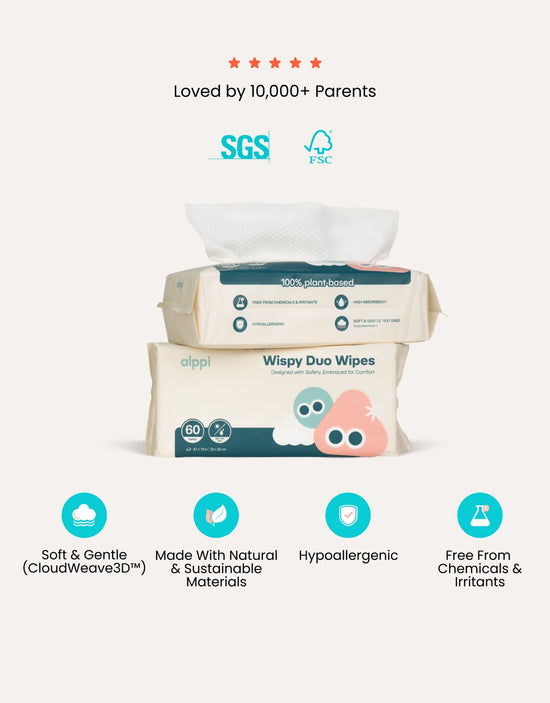
Wispy Duo Wipes (Dry)
Use wet or dry for sticky fingers, messy faces, and high-chair trays after finger-food practice.

Wispy Cloud Diaper Weekly Bag
A week of soft, stretchy diapers to see how the fit holds up through sitting, scooting, and crawling.

Wispy Cloud Diaper Monthly Box
A full month of breathable diapers delivered, so you can focus on play instead of store runs.
When to Talk With Your Pediatrician

Milestones vary, so one skill alone doesn't tell the whole story. Reach out to your pediatrician if you notice any of the following:
- Your baby doesn't reach for or grasp objects as they get older.
- They strongly favor one hand or one side of the body.
- They aren't making progress in other areas, like sitting or babbling.
- They lose a skill they previously had.
A pediatrician can look at your baby's overall development and suggest next steps, including an early intervention evaluation if needed.

Diaper + Dry Wipes Value Combo (Monthly)
A month of Wispy Cloud Diapers plus dry wipes in one order, ready for every messy, milestone-filled day.
Why Parents Trust Alppi Baby Through Every Milestone
From first grabs to first steps, comfort matters. Our Wispy Cloud Diapers and dry wipes are hypoallergenic, dermatologist-tested, and free from fragrances and harsh chemicals, so your baby stays comfortable while they explore.
See the full testing standards on our Safety and Certifications page, or read what other parents are saying on our Reviews page.
Gentle Essentials for Busy Little Hands
Soft diapers, dry wipes, and baby-safe toys that keep up with every reach, grab, and messy mealtime.
Explore Alppi Baby


