


You can reuse many baby items from your first round if they're clean, undamaged, complete, not recalled, and still consistent with current safety guidance.
Preparing for a second baby is exciting, but it also comes with more to think about. You're getting ready for a newborn while caring for your older child, organizing your home, and planning for new daily routines. The good news is that you don't have to make everything perfect. Read on for practical tips to help your family get ready for baby number two, including where everyday diapers fit into the plan.
- Make a simple plan for your health, home, older child, and budget.
- Check which baby items can be safely reused.
- Prepare your older child with honest, age-appropriate conversations.
- Arrange childcare for labor, appointments, and the first weeks.
- Set up safe sleep and diaper changing areas.
- Stock up on diapers, wipes, easy meals, and household basics.
- Ask family or friends for specific, practical help.
Start With a Second Baby Preparation Plan

Preparing for a second baby is easier when you divide the work into smaller tasks. Focus on what your family needs instead of trying to copy everything you did before.
Review Your First Baby Experience
Before shopping, think about what worked well with your first baby. You may already have clothing, bottles, a stroller, a baby carrier, or other useful items. Make a list of what you actually used and what you didn't need. This can help you save money and avoid filling your home with products that may not be useful.
Create a Preparation Timeline
| Time | Tasks to Consider |
|---|---|
| Before pregnancy | Health checkup, budget, pregnancy spacing, and support |
| Early pregnancy | Talk with your older child and review your home setup |
| Middle of pregnancy | Check baby gear, plan childcare, and review leave from work |
| Third trimester | Set up the baby's sleep space and pack your hospital bag |
| Final weeks | Install the car seat, prepare meals, and confirm backup childcare |
| After birth | Adjust routines, share responsibilities, and rest when possible |
You don't have to complete every task early. Use the timeline as a helpful guide, then adjust it to fit your pregnancy and family.
Prepare for a Second Pregnancy
Your second pregnancy may feel different from your first. You may have less time to rest because you're already caring for an older child.
Schedule a Health Checkup
If you're planning another pregnancy, speak with your healthcare professional about your previous pregnancy and birth, any C-section or birth complications, current medications, vitamins and supplements, existing health conditions, pelvic floor concerns, back pain, your recovery from the first birth, and pregnancy spacing.
Discuss which evaluations, tests, or treatments are appropriate for you based on your medical history. Ask about a prenatal vitamin containing 400 micrograms of folic acid, since some people may need a different amount based on their health history.
Think About Pregnancy Spacing
Pregnancy spacing is a personal decision. Your health, age, fertility, recovery, previous birth, family plans, finances, and support system can all affect the timing.
The American College of Obstetricians and Gynecologists (ACOG) advises avoiding an interval shorter than six months between giving birth and conceiving again. If considering pregnancy sooner than 18 months, discuss the potential benefits and risks with your healthcare professional. The appropriate timing depends on your individual health and circumstances.
Prepare Your Older Child for a New Baby
Your older child may feel excited, curious, unsure, jealous, or a combination of emotions. Simple conversations and steady routines can help them adjust.
Explain What Newborns Are Like
Tell your child that the newborn will cry often, sleep frequently, need help eating, wear diapers, need gentle handling, and be unable to play right away. Newborns don't play like older children, but your older child can talk, sing, or look at books with the baby while an adult supervises.
Use books, photos, and baby dolls to help your child understand what to expect. Try to keep your explanation honest instead of promising that the baby will always be fun or easy.
Let Your Child Help and Keep Familiar Routines
Give your older child small choices, such as selecting a baby outfit, a blanket, a book, a soft toy, or a decoration for the baby's room. Helping should be optional. Your older child shouldn't feel responsible for feeding, carrying, or watching the baby.
Try to maintain important routines where possible, such as bedtime, preschool or daycare, meals, favorite activities, and visits with grandparents or friends. If a room or bed change is necessary, making it before the baby arrives may give your child more time to adjust.
Plan Special Time Together
Set aside short periods for one on one time. Reading a book, taking a walk, or playing together for a few minutes can help your older child feel connected during the transition.
Some children may become more clingy or act younger after a new sibling arrives. Extra patience and reassurance can help during this adjustment.
Check and Reuse Baby Gear
You may already own many of the items needed for your second baby. Inspect everything carefully before using it again.
| Item | What to Inspect |
|---|---|
| Crib | Damage, missing parts, current safety standards, and recalls |
| Mattress | Firmness, fit, cleanliness, and damage |
| Car seat | Expiration date, recalls, damage, crash history, labels, and parts |
| Bottles | Cracks, cloudiness, worn nipples, and cleanliness |
| Breast pump | Motor condition and pump part wear |
| Stroller | Brakes, wheels, straps, and recalls |
| Baby carrier | Buckles, fabric, straps, and instructions |
| Clothing | Stains, damage, loose buttons, and suitable sizes |
| Baby monitor | Cords, battery, and safe placement |
Replace items that are damaged, recalled, missing safety parts, or past the manufacturer's stated useful life.
Be Especially Careful With Car Seats
Use a car seat that's suitable for your baby's size and installed according to the manufacturer's instructions. Avoid using a secondhand seat if you don't know its complete history.
Don't Use a Car Seat That
- Is missing labels or parts
- Has an unknown history
- Is subject to an unresolved recall
- Has exceeded the manufacturer's stated expiration or useful life
Check the seat for recalls and don't use a secondhand seat unless you know its complete history and can confirm it has never been involved in a crash. The National Highway Traffic Safety Administration (NHTSA) also recommends checking the manufacturer's labels and instructions.
Prepare a Second Baby Shopping List
You may not need a full newborn shopping list this time. Start with the basics and buy more only when you know you need it.
Essential Supplies
- Newborn and larger size diapers
- Baby wipes or dry wipes
- Diaper cream
- Changing pads
- Newborn clothing
- Sleep sacks
- Burp cloths
- Feeding supplies
- Baby towels and washcloths
- A digital thermometer
- Postpartum supplies
- An infant car seat
It can help to have a small supply of diapers in more than one size, since babies grow at different rates and your newborn may not stay in one size for long. Alppi's sizing guide is a quick way to confirm you're starting in the right range.
Avoid Overbuying
Don't buy too many newborn size clothes or diapers before the baby arrives. It's usually more practical to start with a reasonable amount and purchase more after you learn your baby's size and skin needs. For everyday diaper changes, Alppi Baby diapers and dry wipes may be convenient options to add to your preparation list.

Wispy Cloud Diaper Monthly Box
A full month of cloud soft, breathable diapers, a solid starting point for a second baby's supply list.

Wispy Cloud Diaper Weekly Bag
A lighter supply that's easy to test in a newborn size before committing to a bigger order.
Set Up a Safe Sleep Space
Preparing the baby's sleep area before the due date can make the first days at home easier. The sleep space should be simple, safe, and easy to reach at night.
Follow Basic Safe Sleep Guidance
The American Academy of Pediatrics recommends that babies sleep on their backs for every sleep, use a firm, flat sleep surface, sleep with a fitted sheet only, stay away from pillows, loose blankets, bumpers, and stuffed toys, and sleep in the parents' room, but not in the same bed, ideally for at least the first six months and preferably for the first year. Review the full safe sleep guidance for more detail.
Keep the Sleep Space Separate
Keep the baby's sleep space separate from the older child's bed or play area. If the children share a room later, the newborn should still have an individual, safe sleep surface.
If you use a swaddle, always place the baby on their back and stop swaddling when the baby shows signs of rolling. Avoid weighted swaddles and weighted sleep products, and follow the manufacturer's instructions to help prevent overheating.
Organize Your Home for Two Children

You don't need to completely redesign your home. A few organized supply areas can make diaper changes, feeding, and playtime easier.
Create Diaper Changing Stations
Place basic supplies where you use them most: diapers, wipes, dry wipes, diaper cream, changing pads, extra clothing, burp cloths, and small trash bags.
Keep one hand on the baby whenever the baby is on an elevated changing surface, and place supplies within reach before beginning. Keep creams, medicines, and small items out of children's reach. Follow the instructions on all baby care products, and stop using a product if it causes skin irritation.
Alppi Baby dry wipes can be kept near changing areas for diaper changes and simple cleanups. Consider comparing bundle sizes before ordering so you purchase an amount your family can use comfortably.
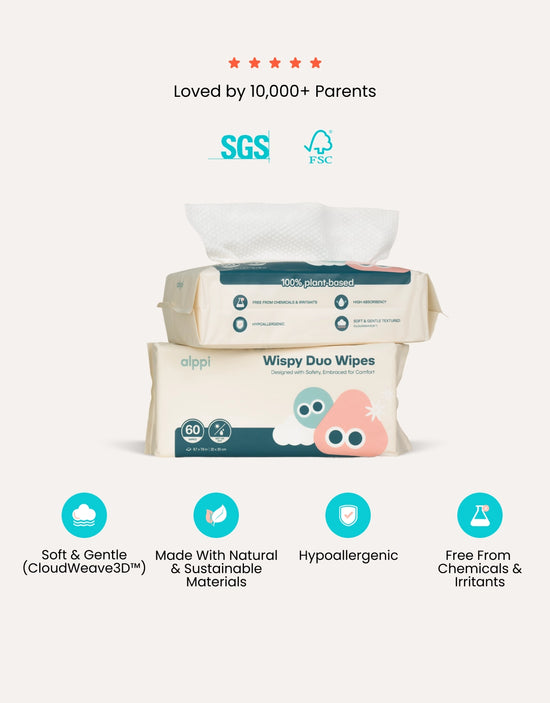
Wispy Duo Wipes (Dry)
Use wet or dry so you can stock a second changing station without added fragrance or lotion.
Plan Childcare for Labor and Appointments
Having a childcare plan ready can make the birth feel less stressful. Choose one main caregiver and at least one backup.
Write Down Important Details
Give caregivers information about phone numbers, pickup permissions, allergies, medications, meals and snacks, bedtime routines, school or daycare schedules, emergency contacts, your child's favorite comfort items, the pediatrician's name and phone number, health insurance information if needed, school or daycare contacts, consent or authorization instructions, and an emergency address and transportation plan. Pack a small bag with clothes, pajamas, snacks, books, and a familiar toy.
Prepare Your Hospital Bag
Your hospital bag may include identification and medical documents, comfortable clothing, toiletries, a phone charger, snacks, baby clothing, an infant car seat, and items for your older child if they'll visit. Bring the infant car seat for transportation home. Car seats aren't intended for routine sleep outside the vehicle.
Explain your birth day plan to your older child in simple language. Tell them who will stay with them and what they can expect.
Plan the First Meeting
Let your older child meet the newborn at their own pace. They may want to look, ask questions, or stay close to you instead. Don't force hugs or kisses. Remind your older child that babies need gentle touches and adult help.
Review Your Family Budget
A second baby may use some of the same items as your first, but other costs can increase. Planning ahead can help you decide what to buy, borrow, or skip.
| Expense | Questions to Ask |
|---|---|
| Diapers and wipes | How much will you use each month? |
| Childcare | Will you need more hours or backup care? |
| Medical care | What will insurance cover? |
| Feeding | Will you need bottles, pump parts, or formula? |
| Clothing | What sizes and seasons do you need? |
| Transportation | Is your car ready for another car seat? |
| Work and leave | Will your income change during leave? |
| Household help | Would meals, cleaning, or grocery delivery help? |
Review your employer's leave policy, health insurance benefits, state programs, and childcare options because coverage and eligibility vary.
If you're considering a diaper or wipes subscription, check the delivery schedule, quantity, price, cancellation policy, and size options. A subscription can be convenient, but your baby's needs may change quickly.
Arrange Support Before the Baby Arrives
Practical help can make caring for two children much easier. Think about the tasks that took the most energy after your first birth.
Ask for Specific Help
Instead of asking people to help generally, ask for specific tasks such as preparing meals, washing laundry, grocery shopping, taking your older child to school, caring for pets, running errands, helping with bedtime, or holding the baby while you shower.
Talk with your partner or support person about responsibilities before the birth. Discuss and assign responsibilities based on availability, health, and capacity. Decide who will manage meals, laundry, nighttime care, appointments, and older child routines.
Prepare for Feeding and Daily Routines
A newborn's schedule can be unpredictable, especially during the first weeks. Flexible routines are usually easier than strict schedules.
Make Feeding Time Easier
Keep a small basket near your feeding area with books, stickers, drawing supplies, puzzles, age appropriate snacks, and a favorite toy for your older child. If your older child is still young, supervise snacks closely and choose foods that are safe for their age and development. Have your child sit while eating rather than walking or playing with food.
Focus on the Routines That Matter Most
Choose a few daily routines to protect, such as morning preparation, meals, preschool or daycare, nap time, bedtime, bathing, and outdoor time. Some days will be organized, while others will feel messy. A flexible plan can help you adjust to both children's needs.
Pack for Postpartum and Newborn Care
Preparing postpartum supplies before the due date can make your return home more comfortable. Keep frequently used items in an easy to reach area.
Consider Preparing
- Comfortable clothing
- Maternity pads
- Nursing pads, if needed
- Water bottles
- Easy snacks
- Prescribed medications
- Diapers and wipes
- Burp cloths
- Extra baby clothes
- Clean bedding and towels
Know Your Warning Signs
Follow your healthcare professional's instructions after birth. Contact them if you have concerns about bleeding, pain, fever, an incision, breastfeeding, urination, or other symptoms.
Contact Your Healthcare Professional Promptly or Seek Emergency Care For
- Heavy bleeding
- Chest pain
- Trouble breathing
- Severe headache or vision changes
- Fainting
- High fever
- Severe abdominal pain
- Signs of infection
The right response depends on how severe the symptom is. Follow your healthcare professional's discharge instructions.
Final Second Baby Preparation Checklist
| Task | Complete |
|---|---|
| Schedule a health or prenatal appointment | ☐ |
| Discuss pregnancy spacing | ☐ |
| Review your first birth and recovery | ☐ |
| Prepare your older child | ☐ |
| Check reusable baby gear | ☐ |
| Check the car seat for recalls and expiration | ☐ |
| Check crib and bassinet recalls | ☐ |
| Set up a safe sleep space | ☐ |
| Prepare diaper changing stations | ☐ |
| Install the car seat | ☐ |
| Confirm pediatrician information | ☐ |
| Review health insurance and leave policies | ☐ |
| Pack the hospital bag | ☐ |
| Confirm primary and backup childcare | ☐ |
| Prepare easy meals and household supplies | ☐ |
| Stock diapers, wipes, and postpartum items | ☐ |
| Plan help for the first weeks | ☐ |
| Discuss responsibilities with your partner | ☐ |
| Check smoke and carbon monoxide alarms | ☐ |
Consider Alppi Baby's bundles and gifting collection if you'd rather stock diapers and wipes together in one order instead of buying each separately.
The Bottom Line on Preparing for a Second Baby
Preparing for a second baby is about making everyday family life easier. Review your health, prepare your older child, check reusable gear, organize safe sleep and diaper changing areas, confirm childcare, and arrange practical help. You don't need to buy everything again or create a perfect routine. A simple plan with flexible expectations can help your family feel ready for the changes ahead.
Check Alppi Baby's FAQ page for current product details, bundles, subscriptions, and promotions. Always follow product instructions and choose items that suit your baby's needs.
Ready to Restock for Baby Number Two?
Compare bundle sizes and pick a supply of diapers and wipes that matches how your family actually uses them.
Shop Alppi Diapers & Wipes


