


A phthalate-free claim is only useful when it is clear, current, and covers the complete finished diaper.
Choosing diapers for your baby can feel like a lot. You want something soft, absorbent, comfortable, and made without ingredients you would rather keep away from delicate skin. Some parents look for diapers without phthalates, along with fragrance-free, latex-free, and lotion-free options. Product formulas and claims can change, so it is important to check the exact product before buying. Keep reading to learn what phthalates are and how to compare diapers made without intentionally added phthalates.
- Choose diapers with a clear, current statement explaining whether the complete finished diaper is made without intentionally added phthalates or tested for specified phthalates.
- Check whether the claim applies to the complete finished diaper, including the elastic, adhesives, tabs, and outer layer.
- Phthalate-free does not mean chemical-free or automatically safer in every way.
- Fragrance-free diapers may be worth trying for babies with sensitive skin.
- Fit, absorbency, softness, and leak protection matter just as much as materials.
- Check the manufacturer's current product information for material details, testing, subscriptions, bundles, and promotions.
What Are Phthalates in Baby Diapers?

Phthalates are a group of chemicals used in some plastics and other products. Certain phthalates can make plastics softer and more flexible. Some phthalates have been associated with reproductive or developmental concerns, but health risk depends on the specific chemical, dose, route of exposure, and duration of exposure.
Why Parents Look for Phthalate-Free Diapers
A diaper stays close to your baby's skin for hours. Because of this, some parents prefer products made without intentionally added phthalates, added fragrance, unnecessary lotions, and other ingredients they would rather avoid.
Phthalates are not the materials normally identified as providing diaper absorbency. Absorbency generally comes from the diaper's absorbent core, which may include cellulose fibers and superabsorbent polymers.
Can Disposable Diapers Contain Phthalates?
The answer depends on the brand, product formula, materials, and testing process. Disposable diapers usually contain several components, such as a topsheet, acquisition layer, absorbent core, backsheet, elastics, adhesives, fastening tabs, inks, or wetness indicators. Packaging should be considered separately from the diaper itself.
The exact construction varies by product. A recent peer-reviewed study on phthalates in disposable diapers examined phthalate levels and potential dermal exposure through diaper contact.
A brand's phthalate-free claim should apply to the exact diaper product you plan to buy. If the information is unclear, contact the manufacturer and ask whether the claim covers the complete finished diaper.
How to Find Diapers Without Phthalates
Finding diapers without phthalates starts with reading the product information carefully. Do not rely only on broad phrases such as "natural," "clean," or "non-toxic."
Look for a Clear Phthalate-Free Claim
Useful wording may include:
- Phthalate-free
- Made without phthalates
- No intentionally added phthalates
- Tested for phthalates
These claims are not equivalent. "Phthalate-free" may imply that no detectable phthalates are present, but the company should define the claim. "Made without phthalates" may refer to the product formula or manufacturing process. "No intentionally added phthalates" generally means that phthalates are not deliberately used, but it does not necessarily rule out trace contamination. "Tested for phthalates" confirms that testing occurred, but it does not automatically state the result.
If a brand mentions testing, ask which phthalates were tested, whether the complete finished diaper was tested, which test method was used, what detection limit applied, and whether the reported result was non-detectable. If available, also ask whether testing was performed by an independent accredited laboratory.
The best product information explains both the claim and what parts of the diaper it covers.
Check the Full Diaper, Not Just the Absorbent Core
A diaper is made from multiple materials. When comparing diapers without phthalates, check whether the brand discusses:
- Inner lining or topsheet
- Acquisition layer
- Absorbent core
- Outer waterproof layer or backsheet
- Elastic leg cuffs
- Waistband
- Adhesives
- Fastening tabs
- Inks or wetness indicators
Packaging should be considered separately from the diaper itself. The goal is not to assume that each component contains phthalates. The goal is to confirm whether the manufacturer's claim covers the complete finished diaper rather than only one material.
Ask the Manufacturer Questions
If a product page does not answer your questions, contact customer service. You can ask whether the complete finished diapers are made without intentionally added phthalates and whether the product has been tested for phthalates.
It is also helpful to ask about fragrance, lotions, latex, dyes, PFAS, and heavy metals. A company that provides detailed answers makes it easier for parents to make an informed choice.
Diaper Brands to Research
The brands below are available or marketed in the United States. The descriptions are starting points for comparison, not proof that every product or size is phthalate-free. Product formulas, manufacturing details, materials, testing, and claims can change, so check the current official product page or contact the manufacturer before buying.
Brand formulas, materials, testing practices, and product claims can change. The brands mentioned here should not be considered independently verified as phthalate-free unless the manufacturer provides a current, product-specific statement or test documentation.
| Brand | What Parents May Compare | Information to Verify |
|---|---|---|
| Coterie | Softness, absorbency, and leak protection claims | Current phthalate statement, claim coverage, testing, fragrance, and lotion information |
| Alppi Baby | Diapers and dry wipes for everyday baby care | Complete product materials, phthalate statement, testing, and current product claims |
| Millie Moon | Softness, availability, and price | Current product claim, latex, fragrance, lotion, and testing information |
| Dyper | Plant-based material and environmental claims | Whether the phthalate statement covers every diaper component |
| Hello Bello | Online ordering, value, and product exclusions | Current claim, materials, testing, and restricted-substance information |
Coterie Diapers
Coterie markets its diapers with claims about softness, absorbency, and leak protection. It may appeal to parents who want to compare a premium diaper for daytime use and overnight wear.
When comparing Coterie with other diapers without phthalates, check the current official information about fragrance, lotions, latex, testing, and the complete diaper construction. Price per diaper is also worth considering, especially if you are changing your baby often.
Alppi Baby Diapers
Alppi Baby offers baby diapers and dry wipes for parents comparing everyday baby-care products. Before describing the diapers as phthalate-free, eco-friendly, or suitable for sensitive skin, check the current official product information on Alppi's Safety and Certifications page and confirm that those claims are clearly supported.
Check the product details for information about fragrance, lotions, latex, chlorine processing, and contaminant testing. If the dry wipes are labeled for use with water, they can give parents more control over what liquid, if any, is used during a diaper change. The wipe material and any cleanser used should still be checked.
Parents who use Alppi Baby regularly may also find a diaper and wipes subscription, bundles, or seasonal offers helpful when available. Check the official store for current prices, subscription terms, and promotions because offers can change.

Wispy Cloud Diaper Monthly Box
A full month supply to test comfort, fit, and skin response before committing to a subscription.
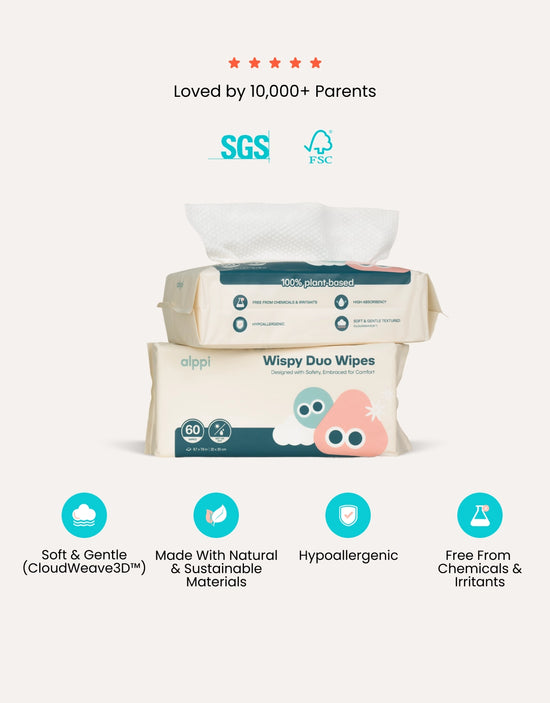
Wispy Duo Wipes (Dry)
Lets you choose what liquid, if any, touches your baby's skin during a change.
Millie Moon Diapers
Millie Moon is a diaper brand sold through retail stores and may appeal to parents comparing softness and price. Parents should confirm the current phthalate statement for the exact product and size.
Compare the diaper's fit, absorbency, fragrance policy, lotion information, latex status, and testing details. A small package is a smart way to test whether the diaper works for your baby before buying a larger box.
Dyper Diapers
Dyper is a diaper brand that markets certain products using plant-based-material and environmental claims. It may appeal to parents who want to compare sustainability claims along with diaper materials and safety information.
Plant-based does not automatically mean phthalate-free, biodegradable, compostable, or environmentally better. Check whether the phthalate statement covers the inner liner, absorbent core, outer layer, elastic, adhesives, and tabs. Also compare softness, sizing, leak protection, disposal instructions, and cost.
Hello Bello Diapers
Hello Bello is a diaper brand sold in the United States that promotes products made without several unwanted additives. Confirm the current phthalate statement for the exact diaper line and review the brand's information about fragrance, lotions, latex, dyes, and chlorine processing.
Hello Bello may be convenient for parents who like online ordering, subscriptions, or value-focused bundles. Subscription terms, discounts, and product availability can change, so check the official store before relying on a promotion.
How to Compare These Diaper Brands

Each baby has different needs, so the best diaper depends on more than one ingredient claim. Use the table below as a starting point, then compare the exact product details and your baby's response.
| Feature | What to Look For | Why It Matters |
|---|---|---|
| Phthalate statement | A clear, current statement covering the complete finished diaper | Helps you identify whether the brand excludes or tests for phthalates |
| Fragrance | Fragrance-free wording or full ingredient disclosure | May be useful for babies with sensitive skin |
| Lotion | No lotion or a full list of lotion ingredients | Helps you understand added coatings |
| Latex | Latex-free construction when needed | Important for allergy concerns |
| Testing | Details about laboratory or contaminant testing | Provides more product transparency |
| Fit | Snug waist and gentle leg cuffs | Helps prevent leaks and rubbing |
| Absorbency | A strong absorbent core and leak guards | Helps keep baby drier during use |
| Price | Cost per diaper | Makes brand comparisons easier |
Features to Consider for Sensitive Skin
Look for diapers that are made without intentionally added phthalates, fragrance-free, and made with minimal lotions and dyes. A soft inner lining and latex-free construction may also be worth considering for babies who are prone to irritation.
Fragrance-free or phthalate-free diapers do not guarantee that a baby will avoid diaper rash. Diaper rash can result from moisture, friction, stool, yeast, or contact irritation. Diaper rash can be managed by changing diapers promptly, keeping the skin dry, and using appropriate barrier care. Consult a pediatrician if the rash is severe, persistent, or shows signs of infection.
Features to Consider for Overnight Use
For overnight use, parents may want to compare absorbency, leak guards, waistband coverage, and fit over several hours.
A diaper that works well during the day may not provide enough protection overnight. Testing one package can save money before committing to a large box.
Features to Consider for Active Babies
Stretchy side panels, flexible leg cuffs, and strong tabs can help the diaper stay in place while your baby crawls, walks, or plays. The diaper should move with your baby without leaving deep marks.
What Else Should You Check Besides Phthalates?
Diapers made without intentionally added phthalates can still contain other materials that some parents may want to understand or avoid. Look at the full ingredient and safety information instead of focusing on one claim alone.
Fragrance and Parfum
Fragrance ingredients can cause irritation or allergic reactions in some people, so fragrance-free diapers may be worth considering for babies with sensitive skin.
Lotions and Skin Conditioners
Some diapers use lotions or skin conditioners on the inner lining. Check whether the product contains ingredients such as aloe, botanical extracts, mineral oils, or other coatings.
Natural ingredients are not automatically right for every baby. If your baby has frequent irritation, a simpler diaper may be worth trying.
Latex
Parents concerned about latex should look for a product-specific latex-free statement. Check the manufacturer's information because materials may vary by product and component.
Dyes and Printed Designs
Colorful designs and wetness indicators may involve dyes or other colorants. Most babies tolerate them well, but parents concerned about irritation may prefer diapers with fewer added colorants.
PFAS and Heavy Metals
Some parents also look for information about PFAS and other contaminants. Choose brands that explain their testing or restricted-substance policies when this information is important to your family.
PFAS are a broad group of chemicals, and product claims should specify whether the product was tested for targeted PFAS, total organic fluorine, or another measure.
A brand's general "clean" or "non-toxic" statement is not the same as a laboratory report. Ask whether testing covers the complete finished diaper and whether the results or testing standards are available.
How to Choose the Best Diapers Without Phthalates
The diaper with the longest list of ingredient exclusions may not be the best fit for your baby. Comfort, skin response, absorbency, sizing, availability, and price all matter.
For Newborns
Newborn diapers should fit gently around the legs and waist. Helpful features include an umbilical cord notch, soft cuffs, and a secure fastening system.
Avoid buying too many boxes before you know which size and product work best. Babies grow quickly, and a poor fit can cause leaks or rubbing.
For Sensitive Skin
- Phthalate-free or no-intentionally-added-phthalate information
- No added fragrance
- Few or no lotions
- Minimal dyes
- Latex-free construction when needed
- A soft inner lining
- Breathable materials
For Overnight Use
- Absorbent core capacity
- Leak guards
- Waistband coverage
- Fit after extended wear
- Larger-size availability
For Active Babies and Toddlers
- Stretchy side panels
- Flexible cuffs
- Strong tabs
- A secure, movement-friendly fit
Common Mistakes When Buying Diapers Without Phthalates
Watch Out For
- Assuming "natural" means phthalate-free. Natural or plant-based materials may describe only one part of a diaper, so always check the elastic, adhesives, outer layer, and fastening materials.
- Believing "chemical-free" claims. A "chemical-free" claim is too vague to evaluate without specific ingredient exclusions, since disposable diapers are made from multiple materials used for absorbency, structure, elasticity, adhesives, and inks.
- Buying in bulk too soon. Every baby reacts differently, so try a small pack first and watch for redness, chafing, leaks, strong odors, or discomfort.
- Ignoring the price per diaper. A package may look inexpensive, but the cost per diaper, including subscription discounts, bundles, shipping costs, and promotions, gives a better comparison.
Specific claims such as "made without phthalates" are more useful than vague marketing language, but they still need to be understood in context.
U.S. Regulatory Context
U.S. phthalate restrictions under the Consumer Product Safety Improvement Act and related CPSC regulations apply to specified children's toys and child-care articles. These rules should not automatically be interpreted as a universal diaper-specific phthalate standard. Product classification and applicable requirements can vary.
The CPSC's phthalate rules should therefore not be presented as proof that every disposable diaper is legally required to meet the same phthalate limit. Parents should rely on product-specific information and current manufacturer disclosures when comparing diapers.
Final Checklist for Buying Diapers Without Phthalates
| Question | What a Strong Product Page Should Provide |
|---|---|
| Is the diaper phthalate-free? | A clear, current statement |
| Does the claim cover the complete diaper? | Information about materials and components |
| Is fragrance included? | Fragrance-free wording or full disclosure |
| Are lotions used? | A clear lotion policy or ingredient list |
| Is latex used? | Latex-free information when relevant |
| Is testing available? | Details about phthalate or contaminant testing, including what was tested and whether it covered the complete finished diaper |
| Will it fit your baby? | Accurate sizing and fit guidance |
| Is it affordable? | Price per diaper, bundles, or subscription options |
Conclusion
Diapers made without intentionally added phthalates may be a preference for parents who want to limit the use of these chemicals. Start with a product-specific phthalate statement, then compare fragrance, lotions, latex, dyes, testing, fit, absorbency, and cost. The brands listed above offer options to research, but always confirm current claims for the exact product before buying.
For more helpful guides about baby diapers, wipes, diaper changes, and caring for your little one, visit Alppi Baby. Check the FAQ page for current information about product materials, bundles, diaper and wipes subscriptions, and seasonal promotions because offers can change.


