


Wondering when do newborns sleep through the night? For most babies, sleeping 6 to 8 consecutive hours happens somewhere between 3 and 6 months — but the timeline varies widely and depends on more than just age.
Every new parent reaches a point where they desperately want to know: when do newborns sleep through the night? The honest answer is that it depends on your baby's weight, feeding method, development, and individual temperament.
This guide covers what "sleeping through the night" actually means, realistic timelines backed by pediatric research, and what you can do to encourage longer stretches safely.
- "Sleeping through the night" for babies means 6 to 8 hours without a feed — not 10 to 12 hours like an adult.
- Most babies begin sleeping longer stretches around 3 to 4 months, once they weigh about 12 to 13 pounds.
- About two-thirds of 6-month-olds regularly sleep 6 to 8 hours at night without waking.
- Newborns under 3 months need to wake and feed every 2 to 4 hours — this is normal and necessary for healthy growth.
- A dry, comfortable diaper and consistent bedtime routine are two practical factors that support longer nighttime sleep.
What "Sleeping Through the Night" Actually Means

When pediatricians say a baby is sleeping through the night, they typically mean the baby sleeps for 6 to 8 consecutive hours without needing a feed. That's very different from the 8 to 10 hours an adult considers a full night. Understanding this distinction helps set realistic expectations and reduces unnecessary worry.
Even babies who "sleep through" still briefly rouse between sleep cycles — they just learn to settle back down without needing you. That's the skill that develops over the first several months.
A Realistic Timeline: When Do Newborns Sleep Through the Night?
| Age | Typical Longest Stretch | What to Expect |
|---|---|---|
| 0–6 weeks | 2–3 hours | Frequent waking for feeds is essential — tiny stomachs can only hold 1–2 oz at a time. |
| 6–12 weeks | 3–5 hours | Some babies begin one longer stretch at night, often in the first half of the night. |
| 3–4 months | 5–6 hours | Circadian rhythm develops. The 4-month sleep regression may temporarily disrupt this progress. |
| 4–6 months | 6–8 hours | Many babies can go longer between feeds at night. Some may still need 1 feed. |
| 6–9 months | 8–10 hours | Most babies are developmentally able to sleep through the night, though some still wake. |
| 9–12 months | 10–12 hours | Longer sleep is common, but sleep regressions can still cause temporary disruptions. |
These are averages — not benchmarks your baby needs to hit. Some babies sleep longer earlier, others take well past 6 months. Both are normal. If your baby is growing well, meeting developmental milestones, and getting enough total sleep in 24 hours, their pattern is likely fine.
Factors That Affect When Babies Sleep Through the Night
- Weight and stomach capacity: Larger babies can hold more milk and go longer between feeds. Most babies begin longer stretches once they hit 12 to 13 pounds.
- Feeding method: Breastfed babies often wake more frequently in the early months because breast milk is digested faster than formula. This is normal and not a reason to switch.
- Sleep environment: A dark, cool room (68–72°F), white noise, and a dry overnight diaper all contribute to fewer unnecessary wake-ups.
- Self-soothing ability: Babies who can settle themselves back to sleep after waking between sleep cycles tend to sleep longer stretches earlier.
- Developmental changes: Growth spurts, teething, and milestones like rolling can temporarily cause more night waking.
How to Encourage Longer Nighttime Sleep
Separate Day from Night
Keep daytime bright with normal noise levels. Keep nighttime dim and quiet — even during feeds and diaper changes. This helps build your baby's circadian rhythm faster.
Build a Consistent Bedtime Routine
Starting around 6 to 8 weeks, a short routine (bath, feed, book, song) signals sleep is coming. Consistency is more important than length — 15 to 20 minutes works well.
Offer Full Feeds During the Day
Making sure baby gets enough calories during daytime hours can help reduce nighttime hunger. Avoid letting baby snack and doze — try to keep them awake for a full feed when possible.
Use a High-Absorbency Overnight Diaper
A wet, leaky diaper is one of the most common causes of unnecessary nighttime wake-ups. Alppi Wispy Cloud Diapers offer 3x absorbency to keep baby dry and comfortable through the night.
Practice Drowsy But Awake
When your baby can manage it, placing them in the crib drowsy but still slightly awake helps them learn to fall asleep in their sleep space — a key skill for sleeping through the night.
When to Talk to Your Pediatrician
- Your baby under 3 months isn't waking to feed (newborns need to eat every 2–4 hours)
- Your older baby suddenly starts waking much more with no clear cause
- You notice signs of pain, fever, or breathing difficulties during sleep
- Your baby seems excessively sleepy or hard to rouse during the day
Overnight Comfort Essentials from Alppi Baby
When your baby does start sleeping longer stretches, a reliable overnight diaper makes all the difference. Alppi Baby diapers are hypoallergenic, dermatologist-tested, and built with 3x absorbency for long-lasting overnight dryness. Check the sizing guide to find the right fit, or explore our full baby diapers collection.

Wispy Cloud Diaper Monthly Box
Cloud-soft overnight protection. A full month of premium diapers delivered to your door.
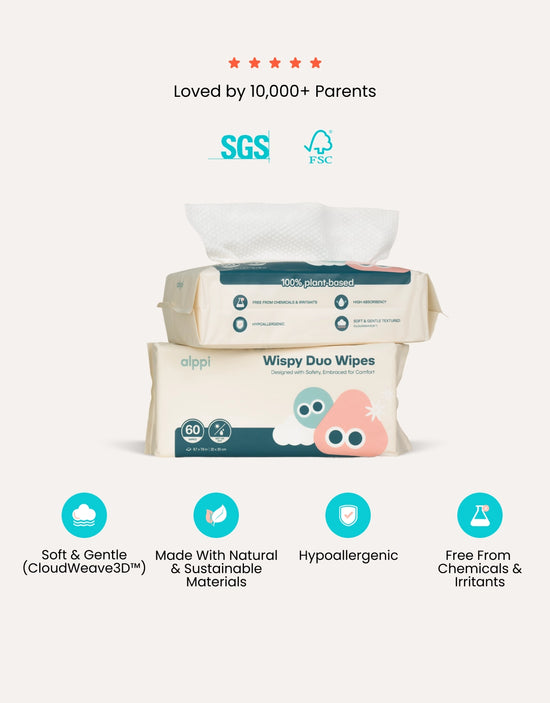
Wispy Duo Wipes (Dry)
Gentle, alcohol-free wipes for quick nighttime changes with minimal disruption.
Conclusion: When Do Newborns Sleep Through the Night?
Most healthy, full-term babies begin sleeping 6 to 8 consecutive hours between 4 and 6 months of age, though some take longer and that's perfectly okay. In the early weeks, frequent nighttime waking is essential for feeding and growth — not a problem to solve.
Focus on building healthy sleep habits, maintaining a consistent routine, and making sure your baby is comfortable and dry overnight. The longer stretches will come as your baby's brain and body mature. If you ever have concerns about your baby's sleep patterns, your pediatrician is the best resource for personalized guidance.
Better Nights Start with Better Diapers
Alppi Baby diapers keep your little one dry and comfortable through even the longest stretches. Hypoallergenic, breathable, and built for overnight protection.
Shop Diapers


