

Training Underwear
8 products
-
Alppi Training Pants Monthly Box
- Regular price
- $105.00
- Sale price
- $105.00
- Regular price
-
-
Alppi Training Pants Sample
- Regular price
- $8.90
- Sale price
- $8.90
- Regular price
-
-
Alppi Training Pants Weekly Bag
- Regular price
- $31.70
- Sale price
- $31.70
- Regular price
-
-
Alppi Training Pants Bundles
- Regular price
- $53.70
- Sale price
- $53.70
- Regular price
-
$63.40
-
BOGO Training Pants Sample
- Regular price
- $8.90
- Sale price
- $8.90
- Regular price
-
$17.80
-
Training Pants + Dry Wipes Value Combo (Monthly)
- Regular price
- $126.96 - $161.60
- Sale price
- $126.96 - $161.60
- Regular price
-
$158.70 - $202.00
-
Training Pants + Dry Wipes Value Combo (Weekly)
- Regular price
- $55.53
- Sale price
- $55.53
- Regular price
-
$61.70
-
Training Pants + Dry Wipes Value Combo (Weekly Bundle)
- Regular price
- $79.39 - $104.90
- Sale price
- $79.39 - $104.90
- Regular price
-
$93.40 - $123.40
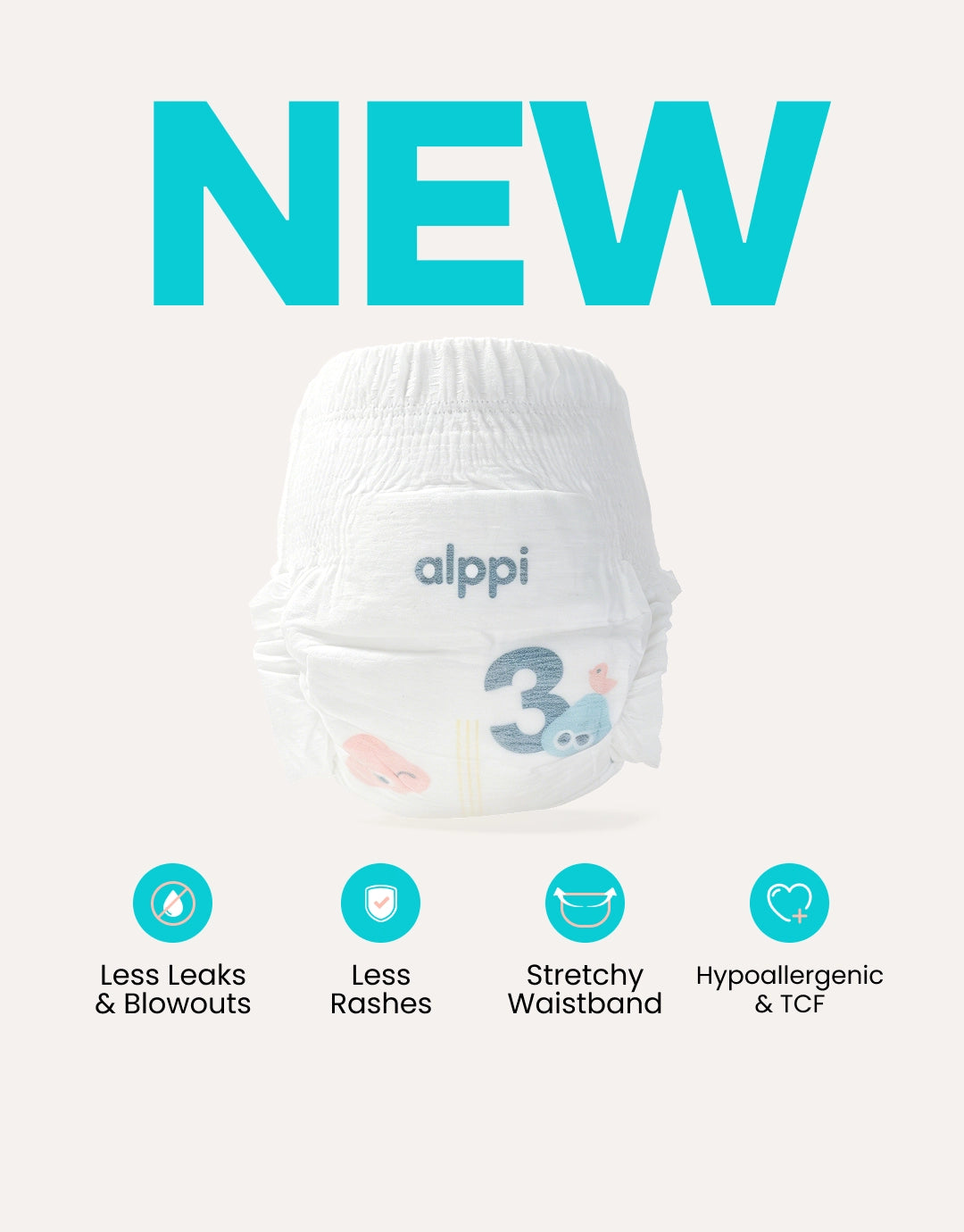


Training underwear is built for the chaotic, independent stage of toddlerhood. It looks and feels like real underwear to boost your child's confidence, but packs enough absorbency to catch accidents before they soak through to clothes.
At Alppi Baby, we craft our training underwear with the same clean, skin-safe standards we use for our diapers, because sensitive skin doesn't stop at age two.
Training Underwear Explained and Why It Works Differently Than a Regular Diaper or Pull-Up
The term is used loosely, but training underwear means something specific in terms of how it functions. It is not a diaper. It is not regular underwear. It sits between the two on purpose, and that position is what makes it useful during potty learning.
Understanding the difference between training underwear and a pull-up style disposable helps you choose the right product for where your toddler is in the process.
Training underwear preserves the learning signal
A standard pull-up disposable absorbs liquid quickly and keeps the toddler feeling mostly dry, which removes the sensory cue that helps them connect the urge to go with what happens when they do not make it to the potty.
Training underwear, particularly cloth styles with padded inserts, lets the child feel enough dampness to register that something happened, without creating an immediate mess on the floor or through their clothing. That feedback loop is what accelerates awareness.
Pull-on design builds the independence that training requires
The practical difference between training underwear and a tab-style diaper is that a toddler can manage training underwear themselves. Pulling down is fast enough to actually make it to the potty in time.
Pulling back up is something they can do on their own without calling for a parent from the bathroom.
That independence is a key motivator. Toddlers who feel ownership over the process tend to progress faster than those who wait for an adult to manage every step.
- Training underwear allows enough wet sensation to reinforce body awareness without a full accident
- Pull-on waistband lets toddlers manage the underwear independently without tab closures or adult help
- Padded crotch absorbs a small accident and buys a few minutes to get to the potty or change
- Feels like real underwear, which motivates most toddlers more than a product that looks like a diaper
- Disposable pull-ups absorb too efficiently for learning and are better suited as overnight backup
- Cloth training underwear combined with a waterproof outer layer handles daytime accidents at home
The Right Time to Introduce Training Underwear and How to Make the Switch Without Pressure
Switching to training underwear before a toddler is physically and emotionally ready tends to lengthen the total training time rather than shorten it.
The frustration of frequent accidents, for both parent and child, can create a negative association with the whole process that takes weeks to undo.
Reading readiness before making the switch matters more than sticking to a timeline.
Readiness signals to look for before switching
A toddler is likely ready for training underwear when they stay dry for at least two hours at a stretch during the day, show awareness of being wet or dirty by pulling at their diaper or telling you, show curiosity about the potty or what adults do in the bathroom, and can follow a two-part instruction reliably.
Physical ability to squat, pull clothing up and down, and get to the bathroom within a reasonable amount of time rounds out the practical readiness picture.
Making the switch gradually works better than going cold turkey
Many families find a phased approach works well. Start with training underwear during waking hours at home where accidents are easy to manage, keep a disposable diaper or overnight diaper for naps and bedtime, and introduce outings in training underwear as daytime success becomes consistent.
There is no rule that says you have to make a complete overnight switch. Gradual increases in training underwear time, tied to real progress rather than a calendar date, produce better results for most toddlers.
- Start training underwear during waking hours at home before adding outings or nap transitions
- Keep overnight and nap diaper protection in place until consistent dry mornings appear for at least two weeks
- Have a change of clothes within arm's reach every time you leave the house during early training
- Avoid framing accidents as failures in front of the toddler; neutral, matter-of-fact responses keep motivation high
- A regular potty schedule every 90 minutes prevents most accidents before the toddler recognizes the urge independently
- Most toddlers show reliable readiness between 18 months and 3 years, with wide natural variation
What Good Training Underwear Is Made From and Why the Material Choice Changes Everything
Training underwear gets worn against skin all day during an active, sweaty, busy toddler stage.
The material is not an afterthought. It determines how comfortable your toddler is, how well the underwear holds up to repeated washing, and whether the fabric causes the same contact irritation problems that low-quality diapers do.
Cotton and bamboo inner layers support body awareness
The best training underwear for daytime learning uses a soft, natural inner layer that sits directly against the skin.
Cotton and bamboo are the two most commonly used materials because they both allow some moisture transfer while staying gentle against sensitive skin.
A synthetic inner layer that wicks moisture away from the skin surface defeats the learning purpose of training underwear. You want the child to notice something happened, not have it hidden from them.
Waterproof or water-resistant outer layers manage the mess
A waterproof outer layer, typically TPU-laminated fabric, prevents accidents from soaking through to clothing. This is what separates training underwear from regular cotton underwear during the early weeks of training. Some parents start with cloth training underwear that has no waterproof layer at home where quick cleanup is easy and transition to a waterproof-backed option for outings where managing a full soaking accident is harder to deal with.
Chemical-free materials matter at this stage too
Toddler skin remains more permeable than adult skin. The same dyes, fragrances, synthetic treatments, and bleaching agents that cause contact irritation in infants can cause the same problems on a two-year-old.
Look for training underwear that carries third-party safety testing, avoids synthetic dyes and fragrances, and uses OEKO-TEX certified or similarly verified fabric.
A rash during potty training is the last thing any parent wants to deal with on top of everything else this stage brings.
- Cotton and bamboo inner layers preserve the wet-awareness feedback that supports faster potty learning
- TPU-laminated outer layer prevents accidents from soaking through to clothing during outings
- Multi-layer padded crotch section provides absorbency for small accidents without becoming a full diaper
- Avoid training underwear with synthetic dyes and fragrances that can irritate sensitive toddler skin
- OEKO-TEX certified fabric means the textile has been tested against harmful substances across the whole production chain
- Machine washable construction is a practical requirement, not a bonus feature, given how often these get changed
How to Get the Sizing Right for Training Underwear on a Toddler Who Never Holds Still
Training underwear that does not fit correctly causes two separate problems. Too tight and it creates pressure marks and restricts the movement that is constant during this age.
Too loose and it gapes at the legs during accidents, which means clothing and furniture end up wet anyway. Getting the fit right is the practical detail that makes training underwear actually work during this stage.
Size by weight, not age
The most common sizing mistake parents make with training underwear is picking by age label.
Toddlers at the same age can differ by eight or ten pounds, and that weight difference changes the fit dramatically. Most training underwear brands size by weight range, and matching to current diaper size is a reliable shortcut.
A toddler in a Size 4 diaper, covering roughly 22 to 37 pounds, typically fits in 2T to 3T training underwear. A toddler in Size 5, covering 27 pounds and above, generally fits in 3T to 4T.
Leg openings and waistband need to move, not just hold
A training underwear waistband should stretch to accommodate squatting without pulling down, which is what happens when a toddler sits on the potty.
Leg openings that are too tight leave red marks after two hours of wear, and any red mark means the fit is off and leaks are more likely.
Look for covered elastic at both the waist and legs, not bare rubber elastic that digs in and loses stretch after a few washes.
- Match training underwear size to current diaper size, not age label
- Size 4 diaper (22 to 37 lbs) typically matches 2T to 3T training underwear
- Size 5 diaper (27 lbs and up) typically matches 3T to 4T training underwear
- When between sizes, go up for easier pull-up and pull-down access
- Covered elastic at waist and legs outlasts bare rubber elastic and sits more comfortably on toddler skin
- Stretchy waistband should accommodate full squat position without the underwear pulling down
Why the Safety Standards Behind Alppi Baby's Products Still Matter When You Switch to Training Underwear
A lot of parents who are careful about diaper ingredients during the newborn and infant stage loosen up on this during the training underwear phase because the product category starts to feel more like clothing than like a diaper.
The reality is that toddler skin is still absorbing more than adult skin, still sensitive to contact irritants, and still in contact with whatever material sits against it for most of the day.
The ingredient and material standards that mattered at birth still matter at age two.
Alppi Baby's clean diaper standard at the toddler stage
Every Alppi Baby Wispy Cloud Diaper, including the Size 4 and Size 5 options that support toddlers through the potty training transition, is free from fragrances, dyes, lotions, latex, rubber, alcohol, heavy metals, parabens, phthalates, pesticides, VOCs, optical brighteners, and chlorine bleaching.
The Totally Chlorine Free (TCF) absorbent core, Cloudfresh breathable fabric, and LiquidLock high-capacity core are built to the same standards at Size 5 as they are at Newborn. That does not change because the child is older.
Using Alppi Size 5 as overnight backup during training underwear days
The most practical approach during active potty training is training underwear during waking hours paired with a proper overnight diaper for naps and sleep.
Nighttime bladder control develops later than daytime control for most children, and the overnight diaper takes the pressure off both parent and child to achieve dry nights before the child is physically ready.
Alppi's Size 5 monthly subscription box contains 120 diapers, which is calculated for a toddler who is using diaper protection primarily for sleep during active training underwear days.
Size 4 Diapers
Size 5 Diapers
Monthly Box
Alppi's ingredient standard applies at every size. No fragrances, no dyes, no chlorine bleaching, no latex, no parabens, no phthalates. The same clean diaper that worked on your baby from the newborn stage works through the potty training window and keeps skin safe right through the transition. Full certification details at alppibaby.com/pages/safety-page.
- Alppi Size 5 is specifically noted as designed for mobile toddlers and the potty training stage
- Cloudfresh fabric is 20 percent more breathable than market-average diapers and 60 percent thinner
- LiquidLock core absorbs 233 percent more liquid than leading conventional brands for reliable overnight protection
- Size 5 monthly subscription box includes 120 diapers for toddlers using diaper backup during sleep only
- All certifications, SGS testing, CPC compliance, and FDA-registered manufacturing apply at every size
- Wispy Cloud Duo Wipes pair with Size 5 diapers for a fully clean, preservative-free and dye free change
Building a Daily Routine Around Training Underwear That Reduces Accidents and Builds Confidence
Training underwear is a tool, not a solution on its own. The routine you build around it determines how quickly your toddler makes progress. Waiting for your child to ask to use the potty is not a reliable training strategy.
Most toddlers do not notice the urge until it is urgent, and the window to act is short. A structured but low-pressure approach to scheduling potty attempts is what turns training underwear days into real progress.
Set a schedule, do not wait for signals
Take your toddler to the potty every 90 minutes to two hours during waking hours, and always before leaving the house, before and after meals, and before naps. This structure is not about forcing them. It is about reducing the number of accidents by building the habit of checking in with the potty before the urgency arrives. Most successful training approaches across methods share this timed schedule as a foundation.
Keep the process matter-of-fact for both success and accidents
Celebrate successful trips with low-key, genuine praise. Handle accidents without drama or disappointment.
A toddler who is afraid of your reaction to an accident will start to hide the feeling of urgency rather than respond to it, which slows training down significantly.
The underwear gets changed, the skin gets cleaned with a gentle wipe, and you move on. Staying calm is the single most effective parenting tool during potty training.
- Potty attempt every 90 minutes during the day builds habit faster than waiting for toddler-initiated requests
- Always attempt before leaving the house, during transitions, and before and after sleep periods
- Keep multiple pairs of training underwear and a change of clothes in every bag during outings
- Use a matter-of-fact tone for accidents so the toddler does not develop anxiety around the process
- Books, songs, or a small potty-specific toy can make sitting on the potty feel like a positive stop rather than an interruption
- Progress is rarely linear; expect good days and harder days without interpreting setbacks as regression
Keep Exploring at Alppi Baby
FAQs About Training Underwear
What is the difference between training underwear and pull-ups?
Training underwear refers to cloth or fabric-based underwear with padded inserts designed to absorb a small accident while still allowing the child to feel that they are wet. Pull-ups are typically disposable and absorb more efficiently, keeping the child feeling drier. That difference matters for training. Training underwear preserves the wet sensation that helps toddlers make the connection between the urge to go and what happens when they do not make it to the potty. Pull-ups are better suited as overnight backup protection during the training period rather than as the primary daytime training tool.
How many pairs of training underwear do I need?
Plan for six to eight pairs at minimum for home use, and have two to three extra pairs packed in your bag any time you go out. During the first week or two of active training, it is realistic to go through three to five pairs in a single day. Having enough clean pairs means you are not doing emergency laundry mid-afternoon. As training progresses and accidents become less frequent, four or five pairs in rotation is usually plenty for most households.
Should I use training underwear at night too?
For most toddlers, no. Nighttime bladder control is a separate developmental process from daytime control, and the majority of children are not physiologically ready to stay dry overnight until 18 months to two or more years after daytime training is complete. Using a proper overnight diaper for naps and sleep removes a significant source of stress and laundry from the process. Switch to training underwear overnight only after your child has been waking up consistently dry for at least two weeks.
What size training underwear should I buy?
Size by weight using your child's current diaper size as the guide. A toddler currently in Size 4 diapers, covering roughly 22 to 37 pounds, usually fits in 2T to 3T training underwear. A toddler in Size 5 diapers, covering 27 pounds and above, usually fits in 3T to 4T. If your child falls between sizes, go up. A slightly larger waistband is easier to pull up and down quickly, which matters more than a precise fit when your toddler has about 30 seconds to get to the potty.
Can I use Alppi Baby diapers alongside training underwear?
Yes, and this is the approach most parents use. Training underwear works well for waking hours at home and increasingly during outings as progress builds. Alppi Baby's Size 5 Wispy Cloud Diapers are specifically designed for mobile toddlers at the potty training stage and work well as nap and overnight backup protection while your toddler uses training underwear during the day. The LiquidLock core handles the higher overnight liquid volume, and the Cloudfresh breathable fabric keeps skin comfortable through long sleep stretches. The Size 5 monthly subscription box of 120 diapers is sized for this exact use pattern.
What should I do when potty training stalls?
Take a break without making a big deal of it. Switch back to diapers for two to four weeks, do not discuss the potty unless your child brings it up, and try again when the pressure is off and a major schedule disruption has passed. Potty training stalls most often when a child was pushed to start before they were fully ready, when a significant life change happens during training, when the child is unwell, or when anxiety around accidents has built up. A clean break and a relaxed restart usually works far better than pushing through the resistance.


