

Training Pants for Boys
8 products
-
Alppi Training Pants Monthly Box
- Regular price
- $105.00
- Sale price
- $105.00
- Regular price
-
-
Alppi Training Pants Sample
- Regular price
- $8.90
- Sale price
- $8.90
- Regular price
-
-
Alppi Training Pants Weekly Bag
- Regular price
- $31.70
- Sale price
- $31.70
- Regular price
-
-
Alppi Training Pants Bundles
- Regular price
- $53.70
- Sale price
- $53.70
- Regular price
-
$63.40
-
BOGO Training Pants Sample
- Regular price
- $8.90
- Sale price
- $8.90
- Regular price
-
$17.80
-
Training Pants + Dry Wipes Value Combo (Monthly)
- Regular price
- $126.96 - $161.60
- Sale price
- $126.96 - $161.60
- Regular price
-
$158.70 - $202.00
-
Training Pants + Dry Wipes Value Combo (Weekly)
- Regular price
- $55.53
- Sale price
- $55.53
- Regular price
-
$61.70
-
Training Pants + Dry Wipes Value Combo (Weekly Bundle)
- Regular price
- $79.39 - $104.90
- Sale price
- $79.39 - $104.90
- Regular price
-
$93.40 - $123.40
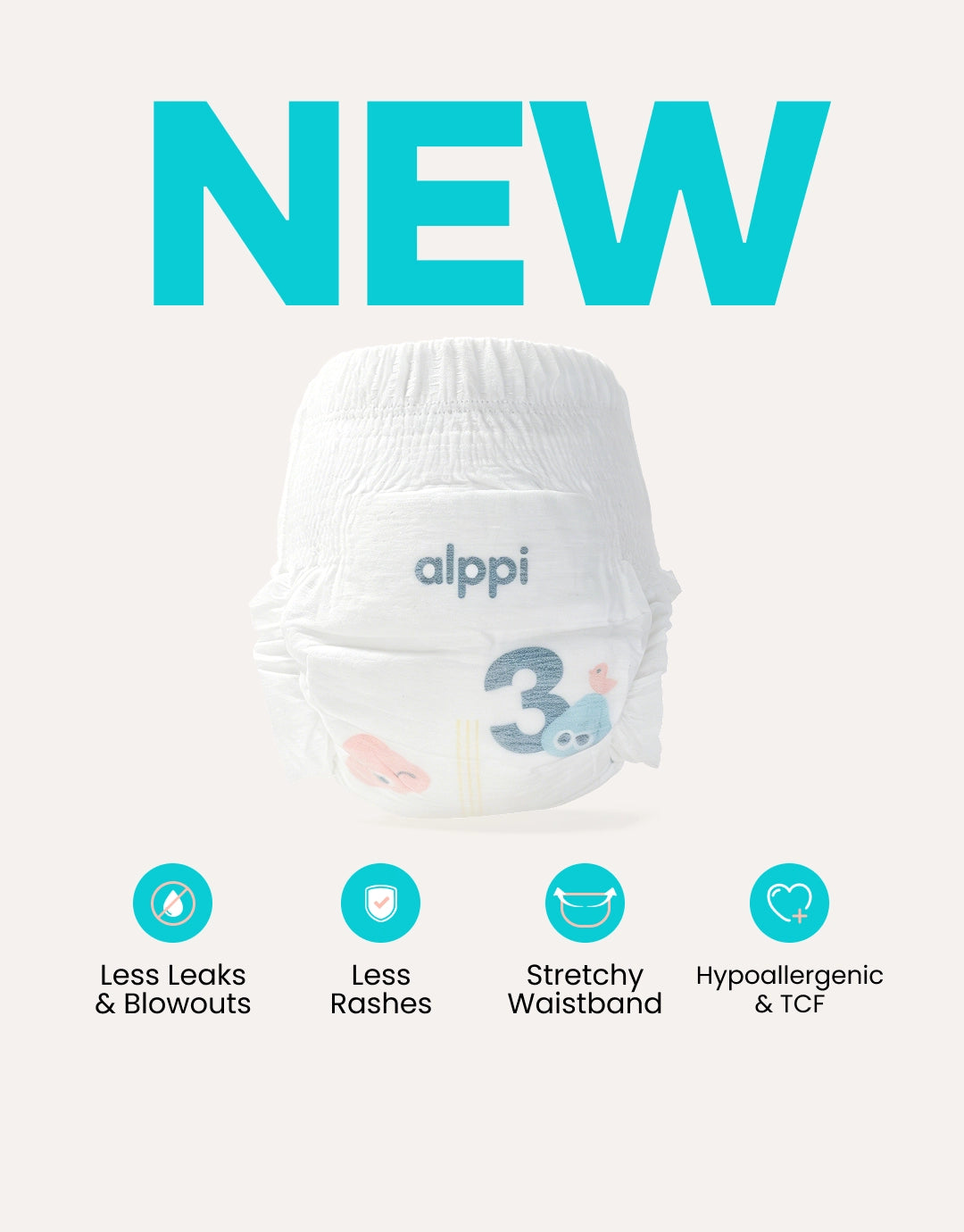


Training pants for boys are essential once your little guy is ready for the potty. Boys often train later and stay highly active, requiring a secure fit that won't bunch, gap, or leak during play.
At Alppi Baby, we design our training pants for boys with the same clean, breathable, skin-safe materials you’ve trusted since the newborn stage to keep up with every move.
What to Look for in Training Pants for Boys That Most Parents Do Not Think About Until It Is Too Late
Shopping for training pants for boys looks simple until you are dealing with a boy who runs full speed in every direction and does not stop moving long enough to register the urge to go.
The physical demands of a toddler boy at this stage are real, and most training pants are not designed with them in mind. Here is what actually matters when you are picking something for an active little guy.
Front-heavy absorbency matters more for boys
Toddler boys wet differently than girls do. The angle of urine flow tends toward the front of the diaper or pant, which means a training pant with evenly distributed padding across the crotch area performs noticeably worse for boys than one with extra absorbency concentrated in the front.
When evaluating cloth training pants, look for models with front-weighted padding or front panels specifically cut for boys. Disposable pull-ups with gender-specific absorbency placement handle this better than one-size-fits-all designs.
A secure leg fit is more important for active boys
A boy running at full speed creates more movement through the hips and thighs than a toddler who is sitting still. Leg openings that gap or ride up during active play are the main cause of side leaks in training pants for boys at this stage.
Stretchy leg cuffs that move with the body, covered elastic that does not dig in, and a snug-but-flexible fit at the thigh make the difference between a training pant that handles accidents and one that ends every outing in a full outfit change.
- Boys tend to wet toward the front, so front-absorbency placement matters when comparing options
- Stretchy leg openings with covered elastic reduce gapping during running and squatting
- Pull-on waistband needs to stretch enough for a fast pull-down when urgency strikes
- Slim, non-bulky design under clothing makes it easier for a boy to feel the difference from his regular pants
- Breathable fabric reduces heat buildup during active daytime play, which is constant at this age
- Secure back rise prevents the training pant from sliding down during climbing and crouching
When Boys Are Usually Ready for Training Pants and the Signals Worth Watching For
Boys train later than girls on average, but the range is wider than most parenting guides admit. Many boys are ready well before two and a half years old, and many perfectly typical boys are not fully trained until close to four.
Age is the least useful indicator of readiness. What matters more is what your son is doing and showing in his behavior around bathroom time.
Readiness is about behavior, not birthday
The clearest readiness signals for boys include staying dry for stretches of at least two hours during the day, pulling at or taking off a wet or dirty diaper, showing curiosity about what you do in the bathroom, being able to follow two-step instructions consistently, and showing interest in flushing, washing hands, or the whole bathroom process.
The ability to squat, pull clothing up and down, and get themselves to a bathroom in a reasonable amount of time rounds out the practical picture.
Boys often respond well to standing practice once daytime training is progressing
Many families find that starting with a seated potty for all bathroom visits, boys included, simplifies the early training process.
Standing practice can be introduced once the seated routine is established and your son is consistently using the potty. This two-phase approach avoids adding coordination demands during a period when just getting to the potty in time is already the challenge.
- Staying dry for two or more hours during the day is the main physical readiness sign
- Showing awareness of a wet or dirty diaper, like pulling at it or announcing it, signals body awareness
- Curiosity about the toilet and bathroom routines is a strong motivational readiness signal
- Ability to follow a two-step instruction reflects the cognitive readiness to respond to the urge
- Most boys train reliably somewhere between 2 and 4 years old, with the average closer to 3
- Starting with seated practice for everything keeps early training simpler and reduces accidents from poor aim
Training Pants for Boys Come in Two Main Types and Picking the Wrong One Slows Things Down
There are two categories of training pants for boys, and they serve different purposes during the training process. Knowing the difference helps you use each one at the right moment rather than expecting one product to do everything.
Cloth training pants for at-home learning
Reusable cloth training pants with padded inserts are the most effective tool for at-home training.
The slightly damp sensation that reaches the skin after a small accident is what teaches the body-awareness connection that drives learning. Cotton and bamboo inner layers preserve that feedback.
A waterproof outer layer, typically TPU-laminated fabric, prevents the accident from soaking through to clothing and furniture while still letting the boy feel that something happened. These wash well and last through the entire training period for most families.
Disposable pull-ups for outings and overnight backup
Disposable pull-up style training pants are more absorbent and more convenient for outings, car trips, and overnight use when a full accident needs to be handled without access to a washing machine.
The downside is that their high absorbency reduces the wet-sensation feedback that supports learning, so they work better as backup protection than as the primary daytime training tool.
Many parents use cloth at home and disposables for outings and sleep, which keeps progress moving while managing real-world logistics.
- Cloth training pants with TPU waterproofing protect clothing while preserving the learning wet sensation
- Cotton and bamboo inner layers keep feedback intact and are gentler on sensitive toddler skin
- Disposable pull-up style training pants are better suited for outings and overnight backup than for daytime training at home
- Boys-specific cloth training pants often feature front-weighted padding to match the typical direction of wetting
- Multi-layer crotch padding absorbs one small to medium accident without reaching the outer layer
- Having at least six to eight pairs of cloth training pants on hand is a realistic minimum for the early weeks
What Training Pants for Boys Need to Be Made From to Keep Toddler Skin Safe During This Stage
The potty training window is a stage where toddler boys are in training pants for most of waking hours, which means skin contact time is still significant even as full diaper use drops.
The same ingredient and material standards that matter in diapers apply in training pants. Toddler skin is still more permeable than adult skin and still reactive to the same contact irritants that caused problems in infancy.
Natural fibers next to the skin
Cotton and bamboo are the right materials for the layer that sits against a toddler boy's skin in training pants. Both are breathable, soft, and gentle on skin that is still sensitive after years in a diaper.
Synthetic inner layers that wick moisture away from the skin defeat the learning purpose of training pants and can also cause friction irritation during the high-movement activity that is constant for most toddler boys.
Chemical-free construction matters at this stage too
Training pants can contain the same synthetic dyes, fragrance treatments, and bleached textile materials that cause rashes in poorly made diapers.
Azo-free dyes, OEKO-TEX certified fabric, and products made without BPA, flame retardants, formaldehyde, or heavy metal colorants are worth seeking out.
Toddler skin in the diaper area has been in contact with diaper materials for two or three years and often has established sensitivities. Switching to a training pant loaded with synthetic chemicals can re-trigger rash patterns that parents thought were behind them.
Alppi Baby's clean ingredient standard covers every size. No dyes, fragrances, chlorine bleaching, latex, parabens, phthalates, VOCs, or optical brighteners in any layer of any Alppi diaper. The same skin-safe commitment that applies at Newborn applies at Size 5, which is specifically designed for mobile toddlers and the potty training stage. Full certification details at alppibaby.com/pages/safety-page.
- Cotton and bamboo inner layers are the safest and most effective materials for training pants for boys
- Azo-free dyes and OEKO-TEX certified fabric confirm the textile has been tested for harmful substances
- Avoid training pants with synthetic fragrances, which are among the most common toddler contact irritants
- BPA-free and formaldehyde-free construction are worth confirming, especially in waterproof outer layer materials
- Third-party certifications like SGS testing and CPC compliance verify safety claims beyond marketing
- Toddler boys who had sensitive skin in infancy are likely to maintain that sensitivity through the training stage
How to Size Training Pants for Boys So They Actually Work and Not Just Look Right on the Packaging
The fit problem with training pants for boys is real and common. A size that looks correct on a packaging chart can gap at the legs or bind at the waist for an individual boy because toddler body proportions vary widely at this age. Sizing by weight and using the current diaper size as a reference is more reliable than sizing by age label.
Match training pants size to current diaper size
A boy currently in a Size 4 diaper, covering roughly 22 to 37 pounds, usually fits in 2T to 3T training pants. A boy in Size 5 diapers, covering 27 pounds and above, usually fits 3T to 4T. If your son is on the heavier end of a size range or has chunky thighs that make the leg opening tight, go up one size. A training pant that is slightly roomier at the waist and legs is easier to pull up and down quickly, which matters a lot when a boy has about 30 seconds to get to the potty.
The waistband needs to accommodate a fast pull-down
A tight waistband that requires two hands and significant effort to pull down is a training obstacle, not a feature. The whole point of training pants is that a toddler can manage them independently.
Look for a waistband with genuine stretch, not just a label that says stretchy. Testing by holding the waistband open and stretching it to at least double the resting width confirms the elastic will handle real toddler movement without resistance during a urgent potty run.
- Size 4 diaper (22 to 37 lbs) typically corresponds to 2T to 3T training pants for boys
- Size 5 diaper (27 lbs and up) typically corresponds to 3T to 4T training pants
- Chunky toddler thighs may need one size up regardless of waist measurement to avoid tight leg openings
- Go up rather than down when between sizes; looser is easier to manage independently
- Covered elastic waistband is gentler and retains stretch through many more washes than bare rubber elastic
- Check for covered elastic at the leg openings too, not just the waist
How Alppi Baby Supports Boys Through the Training Pants Stage With Clean, Active-Ready Products
Potty training a boy is its own thing. The timeline is different, the movement demands are different, and the patience required from both parent and child tends to get tested in a very specific way. Alppi Baby builds products for this stage that work with the reality of toddler boys rather than assuming every training scenario looks the same.
Alppi's Size 4 and 5 diapers support the transition alongside training pants
The most practical approach during active potty training is training pants during waking daytime hours, paired with an Alppi Wispy Cloud Diaper for naps and overnight. Nighttime bladder control develops separately from daytime control and usually takes longer in boys than girls. Alppi's Size 5 is specifically designed for mobile, active toddlers at the potty training stage, with a LiquidLock core that holds over 40 fluid ounces for overnight coverage and Cloudfresh breathable fabric that keeps the skin environment cool through long sleep stretches.
Size 4 Diapers
Size 5 Diapers
Monthly Box
The clean ingredient list is consistent at every size
Every Alppi Wispy Cloud Diaper from Newborn through Size 5 is free from fragrances, dyes, lotions, latex, rubber, alcohol, heavy metals, parabens, phthalates, pesticides, VOCs, optical brighteners, and chlorine bleaching.
The Size 5 monthly subscription box includes 120 diapers, which is calibrated for a toddler boy using diapers primarily for overnight and nap protection while wearing training pants during waking hours. The subscription saves 15 percent on every order and ships free, with size adjustments available through the account portal as needed.
- Alppi Size 5 holds over 40 fl oz in lab testing, built for overnight and nap protection during training pants days
- LiquidLock core absorbs 233 percent more than leading conventional brands for fewer overnight leaks
- Cloudfresh fabric is 20 percent more breathable than market average diapers and 60 percent thinner
- Size 5 monthly box of 120 diapers is sized for a boy using diapers for sleep backup only
- Monthly subscription saves 15 percent and ships free, with size and frequency adjustable anytime online
- Wispy Cloud Duo Wipes are preservative-free, dye free, and SGS-tested against 200+ chemicals for clean changes at every stage
Keep Exploring at Alppi Baby
Questions About Training Pants for Boys
Do boys need different training pants than girls?
The functional difference that matters most is absorbency placement. Boys tend to wet toward the front, so training pants with front-weighted padding or a deeper front crotch panel work better for most boys than unisex designs with even padding. Fit around the thighs also tends to matter more for boys, who often have chunkier legs and need more room in the leg opening without the waist becoming too loose. Many parents find boys-specific training pants manage accidents more effectively than unisex or girls-specific options.
At what age should I start training pants for my son?
Age is the wrong starting point. Readiness is the right one. Boys on average show reliable training readiness a few months later than girls, often between 2.5 and 3.5 years, but some boys are ready earlier and some typical boys are not fully trained until close to four. The signals that matter are staying dry for two or more hours during the day, showing body awareness by pulling at a wet diaper, following two-step instructions, and being physically able to pull their pants up and down independently. Pushing training before those signals appear consistently tends to extend the total process.
How many pairs of training pants do I need for my boy?
Plan for at least six to eight pairs for at-home use during active training, with two to three spare pairs in the bag for every outing. During the first week or two, three to five changes a day is completely normal for boys who are just getting started. Having enough pairs means you are not doing emergency laundry at 2 PM. As accidents become less frequent, four or five pairs in rotation is a reasonable ongoing stash for most households.
Should I use training pants at night for my son?
For most boys, no. Nighttime bladder control develops later than daytime control for most children, and it develops later in boys than in girls on average. Using an overnight diaper for naps and bedtime while training pants are worn during waking hours is the approach most pediatricians recommend. It removes the stress of overnight accidents, which do not indicate a problem with daytime training progress at all. Switch to overnight training underwear only after your son has been waking up dry consistently for at least two weeks.
Can I use Alppi Baby diapers alongside training pants for boys?
Yes. Pairing training pants during the day with Alppi Baby's Size 5 Wispy Cloud Diapers for overnight and nap protection is the practical approach most families use during potty training. Alppi's Size 5 is specifically designed for mobile toddlers at the training stage, with LiquidLock core capacity of over 40 fluid ounces for overnight coverage and Cloudfresh breathable fabric to keep skin comfortable during long sleep stretches. The Size 5 monthly subscription box contains 120 diapers, which is calibrated for a boy using diapers primarily for sleep backup while wearing training pants during the day.
What should I do if my son resists wearing training pants?
Resistance usually means one of a few things: the training pants are uncomfortable (wrong size, tight waistband, irritating fabric), the timing is off and he is not quite ready, or there is pressure or anxiety around the process creating avoidance. Check the fit first. If the fit is correct, take a break from active training for three to four weeks without making a big deal of it. Go back to regular diapers, do not mention the potty, and let the pressure fully dissipate. A fresh start with a relaxed attitude a few weeks later almost always goes more smoothly than pushing through active resistance.


