

Potty Training Pants
8 products
-
Alppi Training Pants Monthly Box
- Regular price
- $105.00
- Sale price
- $105.00
- Regular price
-
-
Alppi Training Pants Weekly Bag
- Regular price
- $31.70
- Sale price
- $31.70
- Regular price
-
-
Alppi Training Pants Sample
- Regular price
- $8.90
- Sale price
- $8.90
- Regular price
-
-
Alppi Training Pants Bundles
- Regular price
- $53.70
- Sale price
- $53.70
- Regular price
-
$63.40
-
BOGO Training Pants Sample
- Regular price
- $8.90
- Sale price
- $8.90
- Regular price
-
$17.80
-
Training Pants + Dry Wipes Value Combo (Weekly)
- Regular price
- $55.53
- Sale price
- $55.53
- Regular price
-
$61.70
-
Training Pants + Dry Wipes Value Combo (Weekly Bundle)
- Regular price
- $79.39 - $104.90
- Sale price
- $79.39 - $104.90
- Regular price
-
$93.40 - $123.40
-
Training Pants + Dry Wipes Value Combo (Monthly)
- Regular price
- $126.96 - $161.60
- Sale price
- $126.96 - $161.60
- Regular price
-
$158.70 - $202.00
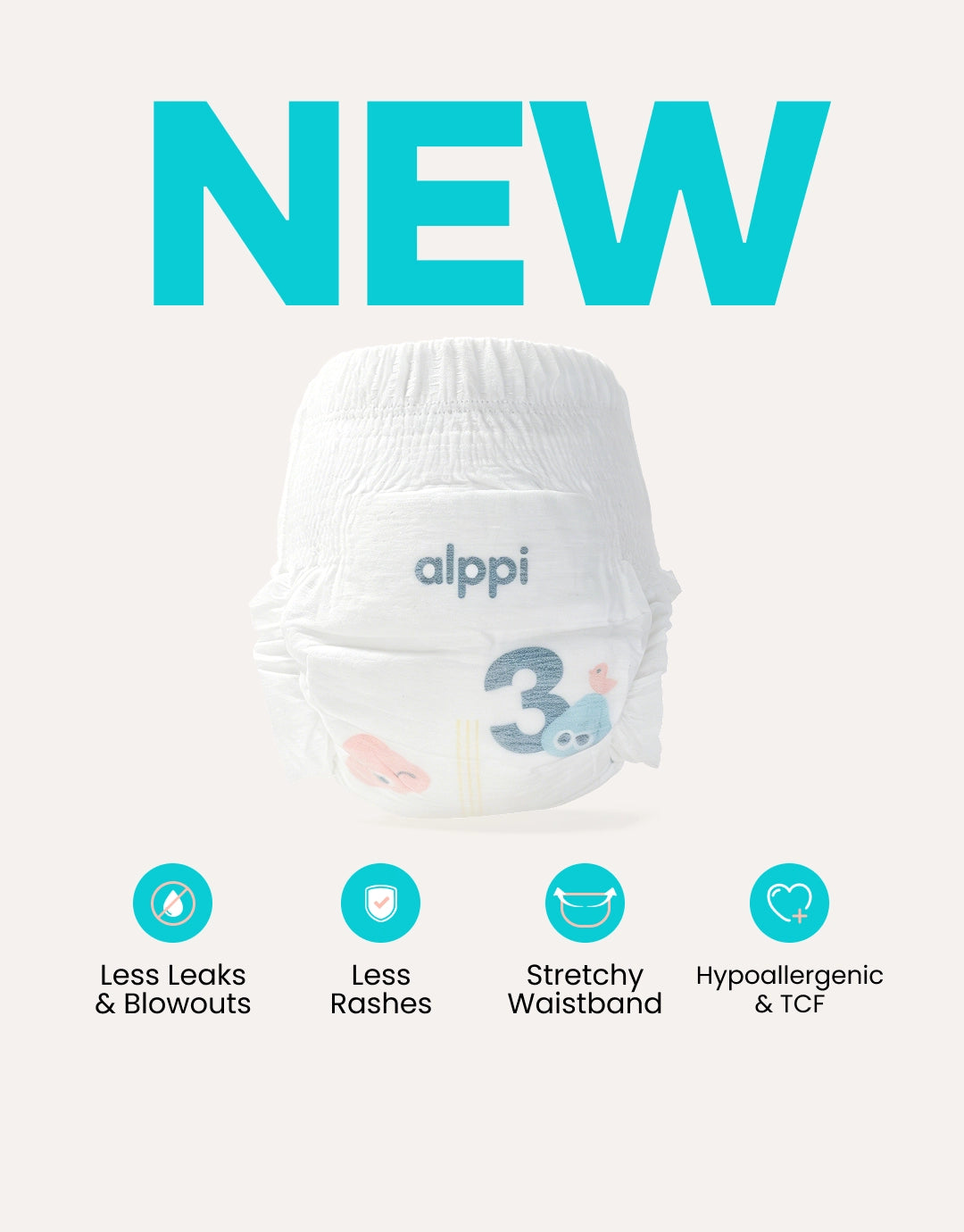


Potty training pants bridge the gap between diapers and regular underwear on your toddler's timeline. They provide the pull-on independence that builds confidence, plus enough protection to handle inevitable accidents.
At Alppi Baby, we design our potty training pants with the same clean, skin-safe standards you’ve trusted since the newborn stage.
What Potty Training Pants Actually Are and Why They Work Better Than Regular Diapers for This Stage
There is a functional difference between a regular diaper and potty training pants, and it matters for how quickly your toddler learns.
A regular diaper is designed to absorb as much as possible and keep the toddler completely comfortable, which removes the sensory signal that helps them learn to associate the urge to go with actually going.
Potty training pants are designed to catch an accident, but they are less padded and pull-on style so the child can feel more, do more for themselves, and start making the connection.
The pull-on design builds big-kid independence
Potty training pants are designed to go up and down like underwear. That means a toddler who is showing interest in the potty can actually pull them down themselves without waiting for a parent to undo tabs.
That small act of independence matters a lot during training. When a child can manage their own pants, they feel more in control of the whole process, which tends to reduce resistance and speed up progress.
Accident protection without removing the learning signal
Good potty training pants absorb a small accident without causing a puddle on the floor, but they do not mask the sensation the way a heavily padded diaper does.
That slight wet feeling is the feedback that tells a toddler they need to get to the potty faster next time. The goal is enough protection to keep clothing and furniture manageable, not so much that the child never feels anything went wrong.
- Pull-on style matches regular underwear so toddlers can manage them independently
- Lighter padding than a regular diaper preserves the wet-sensation feedback that supports learning
- Enough absorbency to catch a small accident without soaking through clothing immediately
- Wearing something that feels like underwear signals to the toddler that this is a new, big-kid stage
- No tabs to mess with means faster pulls down and up at the potty, reducing the chance of an accident en route
- Works well during daytime training while using a higher-absorbency diaper for overnight or naps
Signs Your Toddler Is Ready for Potty Training Pants and What to Watch For
Starting potty training too early is one of the most common mistakes parents make, and it usually results in a much longer and more frustrating process.
Toddlers are ready at different ages, and age is actually the least reliable indicator. What matters more is what your child is doing and communicating around bathroom time.
The signals that say yes, now is a good time
Readiness signs include staying dry for two or more hours at a stretch, showing interest in the toilet or in watching you use it, pulling at their diaper when it is wet or dirty, being able to follow two-step instructions, and showing the physical ability to pull their own pants up and down. When several of these line up at the same time, the chances of a smoother training experience improve significantly.
What to do if training stalls
If your toddler was showing all the signs but training has hit a wall, the most common reasons are a major life change (new sibling, new home, new daycare), stress or anxiety around accidents, or simply not being physically ready to hold urine long enough yet.
Taking a short break from active training, going back to regular diapers without any fuss, and trying again in four to six weeks usually works better than pushing through the resistance. Potty training pants are a tool, not a finish line.
- Staying dry for 2 or more hours during the day is a strong physical readiness signal
- Showing curiosity about the toilet, potty chair, or what other people do in the bathroom
- Pulling at the diaper when wet or dirty shows body awareness that is needed for training
- Ability to follow a two-step instruction shows the cognitive readiness to respond to the urge
- Being able to pull pants up and down independently is the practical skill that makes pull-ons work
- Most toddlers show these signs between 18 months and 3 years, but the range is wide and normal
What to Actually Look For in Potty Training Pants Beyond Just Fit and Size
Most parents focus on absorbency and pull-on ease when choosing potty training pants, which are fair priorities. But materials matter here just as much as they do in regular diapers.
A toddler in potty training pants is wearing them for most of the day, and the skin in the diaper area is still sensitive and easily irritated by the same ingredient categories that cause problems in infancy.
Skin-safe materials are still essential at the toddler stage
A training pant that contains synthetic dyes, fragrance, chlorine-bleached materials, or latex sits against your toddler's skin the same way a diaper does. Many parents who were careful about diaper ingredients during the baby stage loosen up on this during potty training because the product category feels more like clothing. The same contact irritant risks apply. Look for the same clean ingredient standards in a training pant that you would in a diaper.
Breathability and fit around active toddlers
A toddler in potty training pants is running, squatting, climbing, and moving constantly.
The training pant needs to stay comfortable during all of that activity without gapping at the legs or creating friction at the waist. Breathable fabric on the outer layer prevents heat buildup and keeps the skin environment drier between accidents.
A stretchy waistband that adjusts to movement is more important during this stage than during infancy because active toddlers create far more fit stress than a baby lying down for a change.
The Alppi Baby standard for toddler products is the same at every stage. No dyes, no fragrances, no chlorine bleaching, no latex, no parabens, and no phthalates. Toddler skin is still developing and still absorbs more than adult skin. The ingredient list on what touches it still matters at age two just as it did at birth.
- Look for training pants free from dyes, fragrances, latex, parabens, and phthalates
- Totally Chlorine Free (TCF) absorbent materials are preferable to Elemental Chlorine Free (ECF) options
- Breathable outer fabric reduces heat buildup during active daytime wear
- Stretchy waistband should accommodate a squatting toddler without gapping, digging in, or restricting
- Soft leg openings that do not leave red marks after a few hours of wear
- Third-party safety certifications (SGS, CPC) confirm the ingredient claims are tested, not just marketed
How Potty Training Pants Fit Into a Daily Routine That Actually Works
Potty training is not an all-or-nothing event. Most toddlers go through a transition period where they wear training pants during some parts of the day and a regular diaper during others.
Building a consistent, low-pressure routine around this is what gets results without turning every outing or nap into a battle.
Day training versus night and nap protection
Most training approaches use potty training pants during waking daytime hours and a higher-absorbency diaper for naps and overnight.
Nighttime bladder control develops later and separately from daytime control, and most children are not neurologically ready to stay dry overnight until well after they have mastered daytime training.
Using a proper overnight diaper for sleep removes the laundry stress and lets both parent and child rest without interruption.
Setting a potty schedule helps more than waiting for signals
Toddlers often do not notice the urge to go until it is urgent, and by then the window to make it to the potty is very short.
Taking your toddler to the potty on a regular schedule, every 90 minutes to two hours during waking hours, after meals, and before leaving the house, reduces accidents and builds the habit more reliably than waiting for them to ask.
Alppi Baby's Size 4 and Size 5 diapers work well as daytime backup during the early weeks of this schedule.
- Use potty training pants during waking hours and a regular diaper for naps and overnight
- Set a potty schedule every 90 minutes to 2 hours rather than relying on toddler signals alone
- Always attempt the potty before leaving the house, before and after meals, and before naps
- Keep training pants and a change of clothes accessible in the diaper bag at all times
- Celebrate every successful potty trip with genuine, low-key praise without over-pressuring dry days
- If accidents spike, check for a life change, stress factor, or illness rather than increasing pressure
Finding the Right Size for Potty Training Pants and When to Make the Switch From Diapers
Sizing potty training pants correctly matters more than it does for a full diaper. A training pant that is too big will gap at the legs and leak during an accident.
One that is too small will be uncomfortable and restrict the movement your toddler needs to get to the potty quickly. Sizing based on weight and current diaper size is the most accurate starting point.
Sizing by weight and current diaper size
Most potty training pants follow standard diaper sizing. A toddler currently in Size 4 diapers, which covers roughly 22 to 37 pounds, typically fits a 2T to 3T training pant.
A toddler in Size 5, which covers 27 pounds and up, typically fits a 3T to 4T. If your child is between sizes or on the heavier end of a size range, go up rather than down.
A slightly roomier training pant pulls up and down more easily, which is more important than a precise fit at this stage.
When to start phasing in training pants
The right time to introduce potty training pants is when your toddler is showing at least three to four of the readiness signs and you have a few days at home to begin a structured routine without major outings or schedule disruptions.
A long weekend, a week between daycare sessions, or a stretch with a consistent caregiver at home is the ideal starting point. Rushing the switch while travel, illness, or a major schedule change is happening tends to produce more accidents and more frustration than progress.
- Size 2T to 3T training pants generally fit toddlers in Size 4 diapers (22 to 37 lbs)
- Size 3T to 4T training pants generally fit toddlers in Size 5 diapers (27 lbs and up)
- When between sizes, choose the larger size for easier pull-up and pull-down access
- Start with a few days at home where you can manage accidents without stress before trying outings
- Keep a full change of clothes in every bag when training pants are in use during outings
- Alppi Baby's Size 5 diaper (120 per monthly box) is designed specifically for mobile toddlers and potty training stages
How Alppi Baby Supports the Potty Training Pants Stage With Clean, Toddler-Ready Products
At Alppi Baby, our commitment to clean, skin-safe products does not stop when a child hits the toddler stage.
The same ingredient standards that make our newborn diapers trustworthy apply to every product in our lineup for older babies and toddlers.
Clean diapers for a toddler who is working through potty training pants still matter because the skin contact is still happening all day long.
Size 4 Diapers
Size 5 Diapers
Monthly Box
Alppi's Size 4 and Size 5 diapers are built for the training transition
Alppi Baby's Size 4 and Size 5 Wispy Cloud Diapers are specifically designed for mobile toddlers who are active, curious, and starting the transition away from full-time diaper use.
The LiquidLock core handles the higher volume a toddler produces, the Cloudfresh breathable fabric keeps the skin environment cooler during long stretches of active play, and the stretchy waistband accommodates the running, squatting, and climbing that is constant at this age.
The Size 5 monthly box includes 120 diapers, calculated to last approximately one month for a toddler using a diaper for overnight and nap protection while wearing potty training pants during the day.
Wispy Duo Wipes for the toddler stage
Toddler changes during potty training involve a mix of partial accidents, successful potty trips that still need cleanup, and full changes.
Alppi's Wispy Cloud Duo Wipes handle all of these without adding fragrance, dyes, or preservatives back to the skin.
They are SGS-tested against more than 200 harmful chemicals, made from FSC-approved plant-based cotton, and can be used dry or dampened with water depending on the situation.
- Alppi Size 5 diapers come in a monthly box of 120, suitable for toddlers using overnight and nap protection only
- LiquidLock core handles the higher liquid volume a toddler produces compared to a younger infant
- Cloudfresh breathable fabric reduces heat buildup during long stretches of toddler activity
- All Alppi products are free from dyes, fragrances, chlorine, latex, parabens, and phthalates
- SGS-tested and CPC-certified under U.S. Consumer Product Safety Commission standards
- Wispy Cloud Duo Wipes pair with Size 4 and 5 diapers for a fully clean, preservative-free change at any stage
Keep Exploring at Alppi Baby
Questions About Potty Training Pants
What is the difference between potty training pants and pull-ups?
The terms are often used interchangeably, but there is a practical distinction. Pull-ups are typically disposable training pants with a similar design to a diaper but with a pull-on waistband. Potty training pants can refer to either disposable or reusable options. What they share is the pull-on design that allows toddlers to manage the waistband independently, which is the key feature that supports the training process. Disposable options are more convenient for outings and overnight use. Reusable cloth options are more economical for daytime training at home and provide a more immediate wet sensation that can support faster learning.
What age do most toddlers start using potty training pants?
Most toddlers begin potty training between 18 months and 3 years, but the range extends in both directions and is completely normal. Age is far less important than readiness signs. A 2-year-old who shows no readiness signs will have a harder training experience than a 2.5-year-old who has been demonstrating all the signals for a few weeks. Forcing the switch before a toddler is physically and cognitively ready almost always extends the total training time rather than shortening it.
Should I use potty training pants overnight?
For most toddlers, no. Nighttime bladder control develops separately from and usually later than daytime control. Most children are not physically ready to stay dry overnight until 18 months to two years after they master daytime training. Using a higher-absorbency diaper for naps and overnight while wearing potty training pants during waking hours is the approach most pediatricians recommend. It protects sleep quality for both child and parent and removes an unrealistic expectation from the process.
How many accidents per day are normal during potty training?
In the first week of active training, three to five accidents per day is completely normal and expected. The number should drop gradually over two to four weeks as the toddler builds awareness and the habit becomes more consistent. If accidents are consistently more than five or six per day after two weeks of structured training, the child may not be quite ready yet and a short break often works better than pressing forward. Every child's timeline is different.
What ingredients should I avoid in potty training pants?
The same ingredients to avoid in diapers apply in training pants: synthetic dyes, fragrances, latex, parabens, phthalates, chlorine-bleached core materials, and alcohol-based treatments. The skin in the diaper area is still sensitive at the toddler stage and still absorbs more than adult skin. A training pant that contains these ingredients can cause the same contact irritation and rash issues that a chemically loaded diaper does during infancy. Look for products that are third-party tested under certifications like SGS and CPC and manufactured in FDA-registered facilities.
Can Alppi Baby's Size 5 diapers be used during potty training?
Yes, and Alppi specifically notes that Size 5 diapers are designed for mobile toddlers and the potty training stage. They are ideal for nighttime and nap protection while the toddler wears potty training pants during waking hours. The LiquidLock core handles the higher overnight volume a toddler produces, the Cloudfresh breathable backing keeps skin cooler through long sleep stretches, and the stretchy waistband accommodates toddler movement without gapping or constricting. The Size 5 monthly box contains 120 diapers, which is calibrated for a toddler using diapers primarily for sleep protection.


