


The key is not rushing the process but recognizing the real signs a toddler is ready for potty training. When you know what to look for, you can start with confidence and avoid unnecessary stress.
Potty training is a big step for your little one and for you. It can feel exciting, confusing, and sometimes overwhelming when you are trying to figure out if your child is truly ready. Let's break down the clear, practical signs that show your toddler may be ready for this important milestone, and what to do once those signs appear.
- Readiness matters far more than age when it comes to potty training success.
- Physical, emotional, and communication signs all play an important role.
- Starting too early can lead to frustration for both you and your toddler.
- Consistency and patience make the entire process significantly smoother.
- Every toddler develops at their own pace and that is completely normal.
- Having reliable diapers and gentle wipes on hand helps during the transition period.
Signs Toddler Is Ready for Potty Training: Quick Checklist
Before exploring each sign in detail, use this table to get a quick overall picture of your toddler's readiness. Seeing several of these signs together over a consistent period is more meaningful than any single sign appearing on its own.
| Readiness Sign | What It Suggests |
|---|---|
| Stays dry for 2 hours or longer | Bladder control is developing and improving |
| Has regular, predictable bowel movements | Potty timing becomes easier to anticipate and plan around |
| Follows simple two-step instructions | Can understand and complete the basic steps of using a potty |
| Pulls pants up and down independently | Physically capable of managing clothing during bathroom trips |
| Shows interest in using the toilet | Emotionally open to learning and motivated to try something new |
| Tells you after going or just before | Communication and body awareness are developing together |
Potty training is a gradual process, not a competition. Patience, consistency, and encouragement will make a bigger difference than any specific technique.
Understanding What Readiness Really Means

Recognizing readiness is about observing consistent patterns over time, not guessing based on age or comparing your toddler to others. When several signs show up together across multiple days or weeks, it usually means your child is developmentally prepared to begin.
True readiness involves three things working together: physical bladder and bowel control, emotional confidence and willingness to try, and enough communication ability to signal needs. If only one or two signs appear, waiting a little longer almost always leads to faster and less stressful results once training does begin.
Readiness Tip
Keep a simple observation log for one week. Note when your toddler stays dry, shows interest in the toilet, or communicates a bathroom need. Patterns become much clearer when written down than when you are trying to remember them in the moment.
Physical Signs a Toddler Is Ready for Potty Training
Physical development is one of the strongest indicators of readiness. Your toddler's body needs enough bladder and bowel control before potty training can realistically succeed, regardless of how motivated they are emotionally.
Stays dry for 2 or more hours
Longer dry periods show that bladder muscles are maturing and beginning to hold urine rather than releasing it immediately.
Wakes from naps with a dry diaper
Sleeping through a nap without wetting indicates growing overnight bladder capacity, a strong readiness signal.
Has predictable bowel movements
Regular timing makes potty trips easier to plan and reduces the chance of accidents during the early training days.
Shows awareness while going
Pausing play, squatting, or making a face during a bowel movement shows your toddler is connecting a physical sensation to an action.
If your toddler is still wet very frequently with no pattern, their body may simply not be ready yet. That is not a problem. During this waiting phase, using reliable and comfortable diapers keeps your child at ease while you watch for signs to strengthen.
Comfortable Diapers During the Waiting Phase
While readiness signs are still developing, breathable and absorbent diapers reduce discomfort and keep your toddler's skin protected. Alppi Wispy Cloud Diapers are soft, hypoallergenic, and designed for active toddlers who are not quite ready to transition yet.

Wispy Cloud Diaper Monthly Box
Cloud-soft and leak-free. The best value option for families still in the pre-training phase watching for consistent readiness signs.

Wispy Cloud Diaper Weekly Bag
A flexible weekly supply that is easy to adjust as your toddler's readiness progresses and diaper needs begin to change.
Behavioral Signs a Toddler Is Ready for Potty Training
Behavior changes often signal growing body awareness before your toddler can fully articulate what they are experiencing. These signs show your child is starting to connect physical sensations with actions and social expectations.
- Pulling at a wet or dirty diaper - discomfort awareness is a strong motivator for change.
- Hiding behind furniture to poop - seeking privacy shows awareness of what the body is doing.
- Showing curiosity about the toilet - following you to the bathroom or asking questions signals readiness to learn.
- Wanting to flush or copy adult habits - imitation is one of the most powerful learning mechanisms toddlers have.
- Asking to wear underwear - expressing a preference for big-kid clothing shows emotional motivation to move forward.
Interest and curiosity are powerful motivators. When toddlers want to be more independent, potty training starts to feel like a personal achievement rather than something being done to them.
Emotional Signs a Toddler Is Ready for Potty Training

Emotional readiness makes the entire process significantly smoother. A toddler who feels confident and secure is far more likely to cooperate and recover quickly from accidents without losing motivation.
| Emotional Sign | What It Indicates | Why It Matters |
|---|---|---|
| Wants to do things independently | Growing autonomy and self-motivation | Intrinsic motivation drives faster progress than external pressure |
| Feels proud after small successes | Responds positively to achievement | Pride reinforces the behaviour and makes accidents easier to recover from |
| Can sit still for a few minutes | Sufficient attention span for the task | Sitting on the potty long enough to go requires patience and focus |
| Responds well to gentle encouragement | Emotionally open to guidance from trusted adults | Positive reinforcement works when children feel safe, not pressured |
If your child becomes very upset at the idea of using the potty, it is almost always better to wait. Pressure can slow progress significantly and create resistance that lasts far longer than the delay itself would have.
Communication Signs a Toddler Is Ready for Potty Training
Your toddler does not need full sentences or advanced vocabulary, but basic communication skills make a real difference. When a child can connect the urge with words or signals, accidents become less frequent and training moves faster.
- Using words like pee or poop - even simple vocabulary shows the connection between sensation and language.
- Telling you before they need to go - advance notice, even just a few seconds, shows growing awareness.
- Telling you right after they have gone - post-accident awareness is the first step toward pre-accident communication.
- Following simple two-step instructions - needed to navigate the basic sequence of using a potty independently.
- Using gestures or expressions to signal discomfort - nonverbal communication counts just as much as words at this stage.
When Multiple Signs Appear Together
One sign alone does not usually mean your toddler is ready. The strongest indicator is when physical, behavioral, and emotional signs appear consistently at the same time across several weeks.
| Signs Present | What It Likely Means | Suggested Next Step |
|---|---|---|
| One or two signs occasionally | Development is beginning but readiness is not yet consistent | Continue observing and watching for more signs to appear |
| Three or more signs consistently over 2 to 3 weeks | Strong readiness signal across physical, emotional, and communication areas | Gently introduce the potty chair and begin a simple routine |
| Signs present then disappear after a life change | Temporary regression due to stress, a new sibling, or a big transition | Return to basics, maintain comfort and routine, wait for stability |
Accident Tip
Accidents are completely normal even after training begins. Keeping gentle dry wipes within easy reach of the potty and bathroom makes quick cleanups calm and fast without disrupting the positive mood you are working to build.
Wipes and Diapers for the Transition Period
Once training begins, accidents happen. Having soft wipes and reliable diapers stocked at home reduces stress and keeps the environment calm when things do not go perfectly.
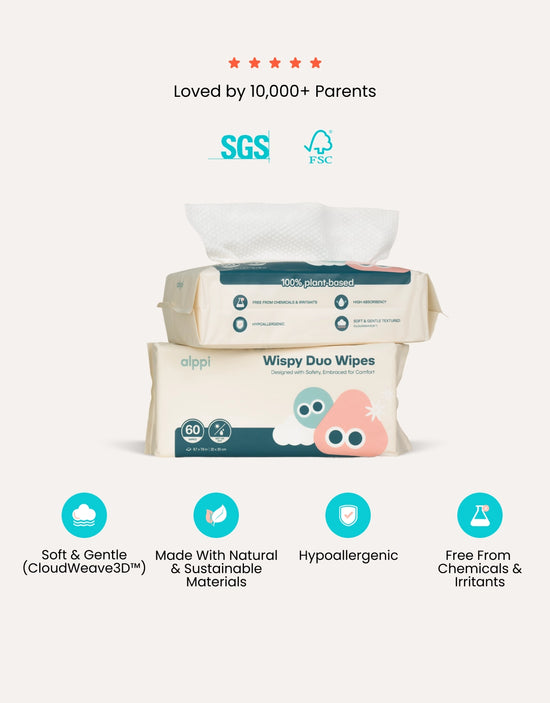
Wispy Duo Wipes (Dry)
Use wet or dry. Hypoallergenic, alcohol-free, and dermatologist-tested. Gentle for frequent cleanups during the active training phase.

Wispy Cloud Diaper Bundles
Stock up and save. A smart choice for the transition period when your toddler still needs daytime and nighttime backup protection.
Signs a Toddler Is Not Ready for Potty Training Yet
It is just as important to recognise when the signs are simply not there. Starting too early is one of the most common reasons potty training takes longer than it needs to, not shorter.
Consider Waiting If You Notice
- No awareness at all of being wet or dirty after going
- Strong fear or distress at the sight or mention of the toilet
- Crying or shutting down when asked to sit on the potty
- Frequent accidents with absolutely no reaction or concern
- A major recent life change such as a new sibling, a move, or starting daycare
Major life changes can temporarily shift a toddler's focus and delay readiness that was previously appearing. During these phases, maintaining comfortable routines and reliable diapers provides stability until the readiness signs return and strengthen.
How to Start Once Signs Toddler Is Ready for Potty Training Are Clear
Once multiple readiness signs are consistent across several weeks, you can gently begin potty training. Keep expectations realistic, focus on encouragement over pressure, and remember that the pace is set by your child, not a timeline.
Introduce the potty chair without pressure
Let your toddler explore the potty chair as an interesting object before any expectation of using it. Sit on it fully clothed, name it, decorate it with a sticker. Familiarity removes fear and makes the first real attempt feel far less significant.
Set simple, predictable routine times
Suggest the potty after meals, after waking from naps, and before leaving the house. Routine creates expectation without pressure because your child begins to anticipate the moment rather than being surprised by it.
Celebrate effort, not only success
Praise sitting on the potty even when nothing happens. Praise trying again after an accident. Effort-based praise builds the resilience your toddler needs to stay motivated through the inevitable ups and downs of early training.
Stay calm and neutral during accidents
Say something simple like: "That is okay, let us clean up and try again next time." Your emotional response to accidents is one of the most powerful signals your toddler receives about whether this process is safe to participate in.
Training Pants as the Bridge Between Diapers and Underwear
Once your toddler is showing strong readiness signs and you are ready to begin, Alppi Training Pants offer a practical middle ground. They pull up and down like real underwear so your toddler feels the independence of big-kid clothing, while still providing a protective layer as accidents gradually decrease.

Training Pants Monthly Box
Best value for the active training period. Cloud-soft pull-ups that feel like real underwear and keep training moving forward.

Training Pants Weekly Bag
A flexible weekly option for testing the transition before committing to a larger supply during early training weeks.

Training Pants Bundles
Stock up and save through the full training window. Always have a fresh pair ready because accidents rarely follow a convenient schedule.
Daytime vs. Nighttime Readiness: Key Differences
Daytime readiness almost always appears before nighttime dryness. Night control depends on deeper sleep cycle patterns and hormonal development that cannot be trained or accelerated the same way daytime habits can.
Your toddler may still need nighttime diapers for months or even years after mastering daytime potty training. This is completely normal and does not mean daytime training has failed or stalled. The two processes are genuinely separate and develop on different timelines.
Get Ready Before the Readiness Signs Appear
Stock up on diapers, training pants, and wipes so you are prepared the moment your toddler is ready to begin. Having the right essentials on hand removes one thing to worry about during a big transition.
Manage Your SubscriptionWhy Parents Choose Alppi Baby During Potty Training
At Alppi Baby, every product is designed to give your child comfort that feels like a cloud and give you peace of mind throughout every stage of early childhood. Diapers, training pants, and wipes are hypoallergenic, dermatologist-tested, and made with eco-conscious materials, so you feel good about what touches your toddler's skin every day.
Learn what goes into every product on the Safety and Certifications page, or hear from real parents on the Reviews page.
Other Products Worth Considering

Alppi Rash-Free Diapers
Designed specifically for delicate skin. Ideal during the pre-training waiting phase when extended diaper wear is still part of the daily routine.

Alppi Newborn Special
A curated starter set that works as a thoughtful gift or a low-commitment way to begin your Alppi Baby journey.


